It's the most ambitious offshore mining project in Canadian history, and the fight for approvals has been long and arduous. That's because of both its scope, its dangers and the potential windfall to a province that badly needs it.
So what is Bay du Nord? What does it promise and what, exactly, are the risks? And how do you balance the need to phase out fossil fuels with the future of an entire province's economy?
The Prime Minister, Justin Trudeau, welcomed the President of the United States of America, Joe Biden, to Canada from March 23 to 24 to continue building on our historic partnership and close friendship to make life better for people on both sides of our shared border. The leaders issued a joint statement with commitments to drive significant progress on shared priorities including growing the middle class, making life more affordable for people, and creating good jobs through clean growth and economic integration, taking ambitious climate action and protecting the environment, and defending North America and advancing peace and security around the world.
Canada and the U.S. are each making significant investments to build our clean economies and grow the middle class. To continue making life more affordable and creating good, middle-class jobs, the two leaders agreed to continue discussions to carve-in Canadian goods into Buy America requirements. The Prime Minister announced that Canada is moving forward with a new investment tax credit for clean technology manufacturing and the leaders launched an Energy Transformation Task Force to accelerate our work together over the next year across the spectrum of the clean economy. The leaders agreed to work together to promote trade in clean goods, including clean steel and aluminum, and continue to collaborate on renewable energy and electric vehicle supply chains, the critical minerals value chain, nuclear energy, and aligning zero-emission vehicle (ZEV) infrastructure to create new opportunities for people to thrive and have great careers.
Working together with the U.S., we will advance a cross-border semiconductor manufacturing corridor, beginning with the signing of an arrangement between Canada and IBM to expand domestic research and development and advanced packaging of semiconductors. Semiconductors enable advances in clean energy, communication, computing, and more, and Canada has a vital role to play in the North American semiconductor ecosystem. Canada’s investment of up to $250 million in this sector will also improve North American competitiveness and supply chain resiliency, help cut pollution, foster economic and national security, and create good middle-class jobs.
To address irregular migration, we are expanding the Safe Third Country Agreement to apply not only at designated ports of entry, but across the entire land border, including internal waterways, ensuring fairness and more orderly migration between our two countries. This change will come into effect at 12:01 A.M (EDT) on Saturday, March 25, 2023. Canada also announced we will welcome 15,000 migrants on a humanitarian basis from the Western Hemisphere over the course of the year, with a path to economic opportunities to address forced displacement, as an alternative to irregular migration.
In both Canada and the U.S., we recognize that to continue growing our economies and making sure people have the best opportunities to succeed, we have to take bold, ambitious action to fight climate change and protect more nature. To further protect the Great Lakes, a source of pride for Canadians and Americans alike, Canada is investing an additional, historic $420 million, as part of our renewed joint commitment to preserving and restoring these iconic waters and ensuring the resiliency of the communities and people that depend on them. This Canadian investment builds on our 50 years of collaboration and continues fighting pollution and protecting our waters. Together, the leaders also agreed to renew and accelerate their climate and nature commitments including cutting pollution from their respective electricity grids. They also committed to advancing the conservation and environmental protection of the Arctic, in partnership with Indigenous Peoples, and continuing to work together to deliver clean air.
Canada is also investing in protecting North America through the North American Aerospace Defense Command (NORAD). The Prime Minister announced a $7.3 billion project to upgrade and build new fighter infrastructure to support the arrival of our new fleet of F-35 fighter jets and make sure our troops have the best equipment to defend North America. He also announced that our early warning Arctic Over the Horizon Radar (OTHR) and threat tracking system will be located in Southern Ontario, complementing a future system based in the Canadian High Arctic. These Canadian systems will complement planned U.S. systems, in order to significantly expand situational awareness of potential threats to our continent. Funding for these projects comes from Canada’s $38.6 billion plan to modernize continental defence.
The leaders also committed to deepen cooperation to protect our critical infrastructure against cyber threats, improve intelligence sharing on cross-border fentanyl and precursor chemical trafficking, and reducing firearms violence through the Cross-Border Crime Forum.
To promote peace and security around the world, Canada is investing an additional $100 million to provide enhanced policing support and equipment to the Haitian National Police, to bolster Haitian-led solutions to the crisis and support peace and security. Canada is also imposing additional sanctions on two more members of the Haitian elite, bringing the total of individuals directly sanctioned by Canada to 19, in addition to coordinated sanctions with our international partners. These sanctions will freeze the assets of former senator Nenel Cassy and businessman and former presidential candidate Steeve Khawly, and make them inadmissible to Canada.
The Prime Minister and the President reiterated their support for Ukraine and condemned Russia’s illegal, brutal, and unprovoked aggression and acknowledged the long-term challenge to the international order posed by the People’s Republic of China. The leaders will continue to work together on countering foreign interference to protect our democratic values. They also discussed cooperation to promote a free, open, prosperous, and secure Indo-Pacific, including through the U.S.-Canada Indo-Pacific Strategic Dialogue, which took place on March 10, and the President expressed support for Canada joining the Indo-Pacific Economic Framework (IPEF).
During his visit, the President made an address to Parliament and attended a dinner hosted by the Prime Minister, deepening the strong, growing, and unique friendship between our countries and the people who call them home.
Canada and the United States are steadfast partners and we will continue working closely together to make life more affordable, create good jobs, protect the environment, and promote peace and security in our countries and around the world.
Quote
“Canada and the United States share a deep sense of friendship, history, and common values. Our ongoing cooperation on issues such as trade, security, and the environment reflects a strong commitment making life better for people on both sides of our shared border.”
Quick Facts
The Prime Minister made a series of new funding announcements, including:
Increasing investments to up to $250 million in the Canadian semiconductor industry;
Addressing irregular migration by expanding the Safe Third Country Agreement to unofficial ports of entry;
Investing $420 million in protecting and restoring the iconic Great Lakes;
Investing $100 million in additional equipment and support for the Haitian National Police to support peace and security in Haiti; and
Investing $7.3 billion in infrastructure to support the arrival of our F-35 fighter jets, from our $38.6 billion NORAD modernization plan, and confirming Southern Ontario will be the location for one of Canada’s early warning and threat tracking systems.
The Prime Minister was accompanied by Chrystia Freeland, Deputy Prime Minister and Minister of Finance of Canada, as well as Melanie Joly, Minister of Foreign Affairs, Mary Ng, Minister of International Trade, Export Promotion, Small Business and Economic Development, François-Philippe Champagne, Minister of Innovation, Science and Industry of Canada, Steven Guilbeault, Minister of Environment and Climate Change of Canada, Jonathan Wilkinson, Minister of Natural Resources and Anita Anand, Minister of National Defence.
For his visit, President Biden was accompanied by Jill Biden, the First Lady of the United States, Antony Blinken, Secretary of State, Jennifer Granholm, Secretary of Energy, Jake Sullivan, National Security Advisor, Jen O’Malley Dillion, Deputy Chief of Staff, Liz Sherwood-Randall, Homeland Security Advisor, Karine Jean-Pierre, Press Secretary, Lael Brainard, Director of the National Economic Council, and Juan Gonzalez, Senior Director for Western Hemisphere, National Security Council.
Prime Minister Trudeau and President Biden have met on numerous occasions since the President’s inauguration in January 2021, including the first bilateral (virtual) meeting in February 2021, and again in November 2021, in Washington, DC, in June 2022, in Los Angeles, and in January 2023, at the North American Leaders’ Summit in Mexico City. They have also met on the margins of several international summits and meetings.
In February 2021, Prime Minister Trudeau and President Biden launched the Roadmap for a Renewed U.S.-Canada Partnership, which lays out an ambitious framework to grow our economies, strengthen the middle class, and build a healthier future.
In 2021, Prime Minister Trudeau and President Biden established the Canada-U.S. Supply Chain Working Group, which strengthens bilateral supply chain security and resilience and reinforces our deeply interconnected and mutually beneficial economic relationship.
The Canada-United States-Mexico Agreement (CUSMA) establishes one of the largest free trade regions in the world, generating economic growth and helping to raise the standard of living for the people of all the member countries.
Canada and the United States share the longest and most secure border in the world, which approximately $3.4 billion worth of goods and services cross daily in 2022.
Bilateral trade between Canada and the United States in goods and services was over $1.3 trillion in 2022.
In 2021, bilateral steel and aluminum trade between Canada and the U.S. was valued at $34.3 billion.
In 2022, the United States remained Canada’s top trading partner in both goods and services. This includes the fact that Canada’s exports to the United States surpassed $598 billion.
In 2021, the U.S. accounted for 91% of Canada’s energy exports by value. The energy relationship is reciprocal. The U.S. accounted for 73% of Canada’s energy imports by value.
Canada buys more goods from the United States than China, France, and Japan combined.
Canada is the top trading partner of most U.S. states.
Canadian companies operating in the United States directly employ 634,000 Americans.
Working with the United States to grow our clean economies and create good, middle-class jobs on both sides of our ... - Prime Minister of Canada Read More
Canada has committed to going net-zero by 2050 and a big part of making that goal a reality is by transitioning the economy from being fossil fuel dependent to a cleaner and low-carbon one. Canada’s Finance Minister and Deputy Prime Minister Chrystia Freeland calls the change the most “significant economic transformation since the Industrial Revolution”.
So what will a ‘green economy’ look like for Canada? And how can it establish itself as a major player as it competes with the United States, its biggest ally and rival? The Globe and Mail’s climate change columnist Adam Radwanski explains.
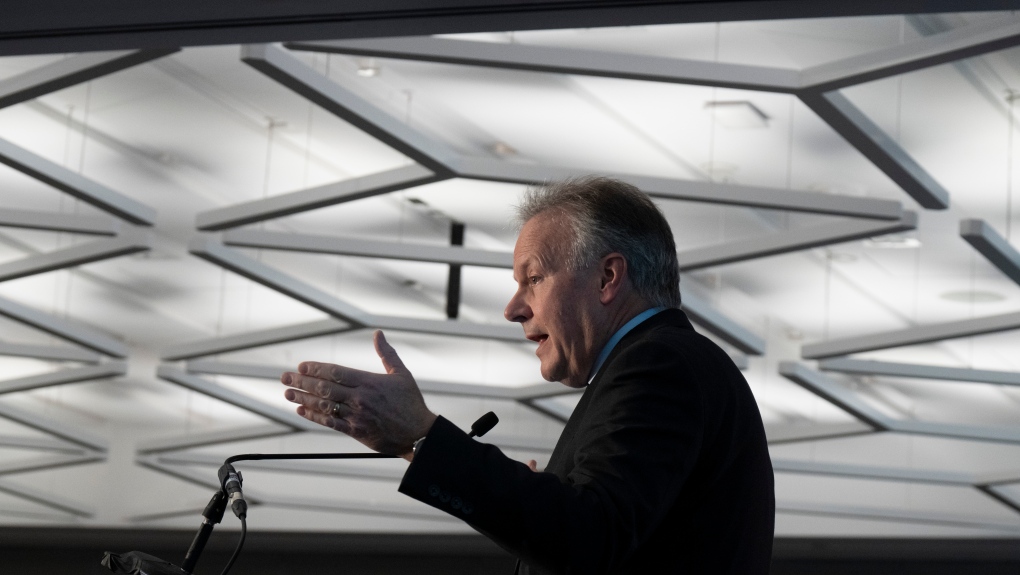
Former Bank of Canada governor Stephen Poloz says Canada’s economy is at a greater risk of a “hard landing” — a rapid economic slowdown following a period of growth and approaching a recession.
Amid the central bank’s interest rate hikes intended to tame inflation, inflation cooled to 5.2 per cent in February. That’s down from 5.9 per cent in January, after 40-year record highs over the summer, reaching as high as 8.1 per cent in June.
Poloz told CTV’s Question Period host Vassy Kapelos — in a joint interview with former Liberal finance minister John Manley airing Sunday — the Bank of Canada and federal government’s efforts to rein in inflation are working, but the chances of a hard landing remain.
“The risk of a hard landing has definitely gone up, given that so much has already happened, and we're still waiting for the rest of the effects of interest rate rises to work their way through,” he said, adding he is “heartened by the response of the supply side of the economy.”
“That's really where a soft landing comes from,” he said. “It's not fancy engineering on the part of the central bank. But as the supply side continues to grow — such as new entrants into the workforce, from immigration and from parents who are taking advantage of the new childcare policy — those kinds of things are giving us, coming up from below, strengthening the economy."
While Poloz said the supply growth is a good sign, at this point it would require “some luck” to achieve a soft landing and avoid a recession.
Federal Finance Minister Chrystia Freeland meanwhile is set to table the budget on Tuesday.
She’s long been signalling Canadians can expect fiscal restraint to avoid stoking inflation, but also some significant investments. Namely, the government has been teasing targeted measures to help relieve the impacts of inflation, plus the already-announced $196 billion in health care funding for the provinces and territories over the next 10 years, and clean economy spending to help compete with the U.S. Inflation Reduction Act, which offers billions of dollars in energy incentives south of the border.
Poloz however called last year’s federal budget a “missed opportunity” to “have a different mix” of spending, and in doing so “lower the trajectory of the Bank of Canada’s interest rates.”
He said there’s now less risk government spending will counteract the impacts of the Bank of Canada’s interest rate hikes.
“I think we're mostly beyond that point as an issue,” he said, adding last year would have been a more opportune time to stimulate the economy.
“That might have been better for everybody,” Poloz continued. “But that missed opportunity is behind us and now the economy is clearly slowing down. We got all that news in the fourth quarter, sooner than most people expected.”
“All the interest sensitive parts, such as housing and business investment, had been down three quarters in a row already, so in that sense, it feels recessionary already,” he added. “So in that sort of space, I think that business about causing inflation is off the table.”
With files from CTV’s Question Period Senior Producer Stephanie Ha
For Jose Guerra Ferrer, a Havana-based industrial engineer, “the economic situation in Cuba is bad”. “I hope it can be addressed by the new parliament,” he says, with reference to national assembly elections this weekend.
In recent years, Cuba’s parliament has implemented gradual policy adjustments to try and ease economic constraints and that is Guerra Ferrer’s hope with the country’s upcoming elections.
The country’s highest political body is assembled through committees such as trade unions and student organisations. Once candidates, most of whom are members of the Communist Party of Cuba, or PCC, are nominated, they can confirm their choice for president.
That is certain to be the incumbent, Manuel Diaz-Canel, who took over from Raul Castro in 2018. The following year, in 2019, Diaz-Canel, a PCC stalwart, adopted a new constitution. Amid growing political dissatisfaction, it was designed to modernise Cuba’s entrenched state apparatus.
Voter absenteeism has become a feature of recent elections in Cuba. Turnout for the November 2022 municipal elections, for instance, fell below 70 percent for the first time, indicating disengagement in a political system that depends on public support.
Decades of sanctions
Large numbers of Cubans have been trying to leave the country [File: Go Nakamura/Reuters]
After US-backed leader Fugencio Batista was toppled in 1959, Cuba became a one-party-state led by Fidel Castro and his successors. Since then, the PCC has defied expectations by surviving decades of economic isolation and the disintegration of the Soviet Union, a key ally.
Since the early 1960s, the cornerstone of US foreign policy towards Cuba has been a controversial trade embargo, among other restrictions. Then, in 2015, the Obama administration began normalising relations with Cuba, including a shift away from sanctions.
By contrast, Donald Trump reintroduced old measures and added new ones as well. He barred US tourism and limited the amount of money Cuban Americans could send to their relatives (some remittance restrictions have been eased under President Joe Biden).
“The truth about sanctions is that repercussions are multilayered,” says Guillaume Long, Ecuador’s former minister of foreign affairs. “Governments are prevented from following standard protocols, which undermines state-building capacity.”
He stressed that “there is no doubt that Cuba’s economy has suffered under US sanctions”. The country also experienced a painful adjustment after the collapse of the Soviet Union in 1991. Up to that point, the USSR supplied 90 percent of Cuba’s petroleum needs and 70 percent of all other imports, including food and medicine, mostly at subsidised prices.
Between 1989 and 1994, Cuban trade with the former Soviet Union plummeted by 89 percent. While domestic production was squeezed, the government consolidated its control over the economy. Large public enterprises have survived through privileged access to credit and foreign currency.
Today, Cuba’s economy remains undiversified and commodity-dependent. Tobacco and sugar account for roughly 30 percent of foreign exchange earnings. Cuba also exports healthcare services by sending physicians and nurses to Brazil and Venezuela. Tourism, meanwhile, represents an important source of revenue.
Elsewhere, the PCC has succeeded in establishing reputable education and healthcare systems. Not only is Cuba’s life expectancy higher than the United States’, it is also the smallest country in the world to have successfully developed a vaccine against COVID-19.
Recent setbacks
Tourism, a key source of revenue, has been badly hit by the pandemic [File: Natalia Favre/Bloomberg]
Due to the outsized role of tourism in Cuba’s economy, COVID-19 dealt the island a body blow. Tourist arrivals fell dramatically during the pandemic, from four million in 2019 to just 356,000 in 2021, Bloomberg News reported. Foreign currency inflows slowed significantly.
To cope with falling international reserves, the PCC was forced to unify Cuba’s dual exchange rate system in January 2021. This involved devaluing the Cuban peso (CUP), which had been set at parity with the US dollar for decades, to the then unofficial rate of 24 pesos per greenback.
However, the new rate was “overvalued” according to Alberto Gabrielle, a senior researcher at Sbilanciamoci, a Rome-based political think tank. “The devaluation did not achieve an equilibrium in Cuba’s import-export mix, causing a scarcity of goods and nudging up inflation,” he added.
Though difficult to measure, Cuba’s official consumer price index rose by 70 percent during 2021. Unofficial estimates showed that inflation increased between 100 percent to 500 percent over the same period. “Queues at supermarkets and pharmacies went from long to longer,” said Gabrielle.
Together with a surge in coronavirus cases at the start of 2021, the hit to purchasing power led to a groundswell of social unrest. In July of that year, Cuba witnessed the largest anti-government demonstrations in years.
Though public dissent is forbidden, thousands of protesters took to Cuba’s streets, voicing concerns over food supplies and the handling of the pandemic by the authorities. The protests were quickly stamped out, but they did succeed in rattling the regime.
“The government got scared, especially when inflation persisted into 2022,” noted Gabrielle. To counter these trends, authorities introduced a second exchange rate for personal transactions in August 2022 at CUP120:$1. This cooled the demand for dollars and eased import price pressures.
Hurricane Ian knocked out Cuba’s national power grid, damaging infrastructure extensively [File: Ramon Espinosa/AP Photo]
At roughly the same time, Cuba was struck by two concurrent shocks. On August 6, the island’s main fuel import facility – the Matanzas supertanker – was struck by lightning. Three of its tanks caught fire, triggering electricity blackouts nationwide.
A month later, in September, a powerful storm surge rolled across western Cuba. Hurricane Ian knocked out the national power grid. It also prompted thousands of evacuations and caused extensive physical infrastructure damage, including to tobacco and sugarcane fields.
Gradual opening up
Even before the events of last year, the PCC agreed to expand private sector activity in an effort to boost output and relieve goods shortages. In February 2021, the government agreed to grant private company status for 2,000 listed professions (up from 127 previously), facilitating partnerships with foreign investors and limiting state control over commercial activities.
While a new law granting equal commercial rights for private companies and state firms has yet to be agreed upon, the government is hoping that piecemeal reforms will stimulate growth.
“Heterodox policies will be maintained, but a gradual opening will probably be the direction of travel for the new parliament,” said Guillaume Long.
Until then, large numbers of Cubans are expected to try and leave the country. A record 220,000 Cubans were caught at the US-Mexico border in the fiscal year 2022, which ended on September 30, Reuters news agency reported. In December 2022 and January 2023, US Customs and Border Protection reported nearly 50,000 encounters with Cuban migrants.
The experience of Guerra Ferrer, the engineer, is not uncommon, “I have many friends who’ve emigrated. My son may also leave to help my wife and I once we retire.”