Rechercher dans ce blog

Thursday, January 26, 2023

U.S. economy posts strong fourth-quarter growth, but with underlying weakness - The Globe and Mail

People shop for clothing at a Costco store in Monterey Park, Calif., on Nov. 22, 2022.FREDERIC J. BROWN/AFP/Getty Images

The U.S. economy grew faster than expected in the fourth quarter, but that likely exaggerates the nation’s health as a measure of domestic demand rose at its slowest pace in 2-1/2 years, reflecting the impact of higher borrowing costs.

The Commerce Department’s advance fourth-quarter gross domestic product report on Thursday showed half of the boost to growth came from a sharp rise in inventory held by businesses, some of which is likely unwanted.

While consumer spending maintained a solid pace of growth, a big chunk of the increase in consumption was early in the fourth quarter. Retail sales weakened sharply in November and December. Business spending on equipment contracted last quarter and is likely to remain on the backfoot as demand for goods softens.

It could be the last quarter of solid GDP growth before the lagged effects of the Federal Reserve’s fastest monetary policy tightening cycle since the 1980s are fully felt. Most economists expect a recession by the second half of the year, though a short and mild one compared to previous downturns, because of extraordinary labour market strength.

“The U.S. economy isn’t falling off a cliff, but it is losing stamina and risks contracting early this year,” said Sal Guatieri, a senior economist at BMO Capital Markets in Toronto. “That should limit the Fed to just two more small rate increases in coming months.”

Gross domestic product increased at a 2.9-per-cent annualized rate last quarter. The economy grew at a 3.2-per-cent pace in the third quarter. Economists polled by Reuters had forecast GDP would rise at a 2.6-per-cent rate.

Robust second-half growth erased the 1.1-per-cent contraction in the first six months of the year. For 2022, the economy expanded 2.1 per cent, down from the 5.9-per-cent logged in 2021. The Fed last year raised its policy rate by 425 basis points from near zero to a 4.25 per cent-4.50 per cent range, the highest since late 2007.

Consumer spending, which accounts for more than two-thirds of U.S. economic activity, grew at a 2.1-per-cent rate, mostly reflecting a rebound in goods spending at the start of the quarter, mostly on motor vehicles. Consumers also spent on services like health care, housing, utilities and personal care.

Spending, which grew at a 2.3-per-cent pace in the third quarter, has been underpinned by labour market resilience as well as excess savings accumulated during the COVID-19 pandemic. Income at the disposal of households after accounting for inflation increased at a 3.3-per-cent rate after rising at a 1.0-per-cent pace in the third quarter. The saving rate rose to 2.9 per cent from 2.7 per cent.

But demand for long-lasting manufactured goods, which are mostly bought on credit, has fizzled and some households, especially lower income, have depleted their savings.

As a result, inventories surged at a $129.9-billion rate compared to a $38.7-billion rate in the prior quarter, adding 1.46 percentage points to GDP growth. There also were contributions from government spending and a smaller trade deficit.

Stripping out inventories, government spending and trade, domestic demand increased at only a 0.2-per-cent rate. That was the smallest increase in private domestic final sales since the second quarter of 2020 and was a deceleration from the third quarter’s 1.1-per-cent pace.

“Rising inventories could bode poorly for growth in early 2023 as corporations may look to reduce excess stocks of goods,” said Erik Norland, senior economist CME Group.

Stocks on Wall Street were trading higher. The dollar rose against a basket of currencies. Prices of U.S. Treasuries fell.

Despite clear signs of a weak handover to 2023, some economists are cautiously optimistic the economy will skirt an outright recession, suffering instead a rolling downturn where sectors decline in turn rather than all at once.

They argue that monetary policy now acts with a shorter lag than was previously the case because of advances in technology and the U.S. central bank’s transparency, which they said resulted in financial markets and the real economy acting in anticipation of rate hikes.

Though residential investment suffered its seventh straight quarterly decline, the longest such streak since the collapse of the housing bubble triggered the 2007-2009 Great Recession, there are signs the housing market could be stabilizing.

Mortgage rates have been trending lower as the Fed slows the pace of its rate hikes.

“A large portion of the reaction to higher interest rates is already in the economy and the financial markets,” said Sung Won Sohn, a finance and economics professor at Loyola Marymount University in Los Angeles. “Since the Fed has succeeded in precipitating a rolling recession, it is time to think about an exit strategy.”

Inflation also subsided in the fourth quarter. A measure of inflation in the economy rose at a 3.2-per-cent rate, retreating from the third quarter’s 4.8-per-cent pace of increase.

While many parts of the economy have shifted to lower gear, the labour market is showing no signs substantial cooling.

A separate report from the Labor Department on Thursday showed initial claims for state unemployment benefits fell 6,000 to a seasonally adjusted 186,000 for the week ended Jan. 21, the lowest level since April 2022. The number of people receiving benefits after an initial week of aid, a proxy for hiring, increased 20,000 to 1.675 million for the week ended Jan. 14.

Companies outside the technology industry as well as interest-rate sensitive sectors like housing and finance are hoarding workers after struggling to find labour during the pandemic.

“There are no signs in the latest jobless claims data that the labour market is cracking at the start of the new year,” said Conrad DeQuadros, senior economic adviser at Brean Capital in New York.

Adblock test (Why?)


U.S. economy posts strong fourth-quarter growth, but with underlying weakness - The Globe and Mail
Read More

The world economy's inflation problem is easing - The Economist

After three chaotic years, investors have several reasons to be cheerful about the world economy. In America inflation is tumbling, raising hopes of a “soft landing”, in which price growth comes under control without a recession. Fortune has smiled on Europe, where a mostly warm winter has caused energy prices to plummet. And China’s economy, freed from Xi Jinping’s destructive “zero-covid” policy, is poised to rebound. Markets are joyous. The S&P 500 index of American stocks has risen by 5% since the start of the year. Share prices in Europe and emerging markets are up by even more.

Alas, it is too soon to declare an end to the world economy’s problems. In America consumer prices fell in December, and annual inflation may dip below 2% this year thanks to cheaper energy and goods. Yet as price growth is plunging, so too is GDP growth. Retail sales and industrial production fell in December and leading indicators of output are down sharply—which usually indicates that a recession is nigh. The healthiest part of the economy is the labour market. But the red-hot demand for workers is not entirely good news: the Federal Reserve will find it harder to be sure that inflation has been tamed.

Despite headline-grabbing lay-offs by the big technology firms, America’s unemployment rate remains just 3.5% and new claims for unemployment benefits are at their lowest in three and a half months. Annual wage growth has fallen according to some measures, but remains around 5%; on January 24th Walmart said it would raise starting wages from $12 an hour to $14. Because workers’ productivity is growing by only about 1% a year, fast wage growth portends price rises that far exceed the Fed’s 2% inflation target.

Some policymakers hope that companies, whose profits surged in 2021, can absorb rapid wage growth without prices having to rise further. Yet by last autumn, higher profit margins accounted for only an eighth of pandemic-era inflation. Given that Wall Street is expecting disappointing earnings for the fourth quarter of 2022, this suggests that firms will raise prices in line with their labour costs.

Markets expect the Fed to start cutting interest rates within a year as growth slows. But if the Fed is serious about reducing inflation to 2% and keeping it there, it will need to keep rates high until wage growth cools—even if that brings about a recession.

Should America face a downturn, it is likely to take Europe with it. Despite falling energy prices, the euro zone also has an underlying inflation problem, as is apparent in rising wage growth. Christine Lagarde, the head of the European Central Bank, has warned that interest rates will have to rise significantly, contrary to the more doveish expectations of investors. A stronger dollar—which is likely if the Fed keeps raising rates and investors take fright at the consequences—would raise imported inflation and make the ecb’s job harder still, while also paring back the rally in emerging markets.

The end of zero-covid in China has lowered the chance that supply chains will gum up. However, its rebound is not an unalloyed good for the rest of the world, which has an inflation problem, not a shortage of spending. China’s extra imports will add more fuel to overheated economies. Europe’s gas storage is so full in part because China’s demand for liquefied natural gas in 2022 was 20% below its usual level. Demand is now likely to bounce back, which could cause prices to surge once again next winter. Only when the twin foes of overheated labour markets and the energy crisis have been vanquished will the world economy be out of the woods.

Adblock test (Why?)


The world economy's inflation problem is easing - The Economist
Read More

Oil Set to End Week Little Changed on Mixed Economic Outlook - BNN Bloomberg

(Bloomberg) -- Oil was set to end the week little changed as concerns of an economic slowdown were tempered by optimism over Chinese demand.

West Texas Intermediate futures traded near $81 a barrel after closing 1.1% higher on Thursday. US economic growth beat expectations in the last quarter of 2022, but there’s still a considerable risk of a recession this year. The Federal Reserve is expected to boost interest rates further next week.

Oil has recovered from a steep drop at the start of the year, largely on hopes that Chinese consumption will recover rapidly following years of strict virus lockdowns. A weaker dollar has added to tailwinds for commodities priced in the currency, and liquidity is returning to the futures market.

Traders are assessing the potential fallout from European Union sanctions on Russia’s seaborne shipments of petroleum products early next month. The EU is considering a plan to cap the price of premium refined fuel exports like diesel at $100 a barrel, with a lower $45 cap for discounted products.

Elements, Bloomberg’s daily energy and commodities newsletter, is now available. Sign up here.

©2023 Bloomberg L.P.

Adblock test (Why?)


Oil Set to End Week Little Changed on Mixed Economic Outlook - BNN Bloomberg
Read More

China must help moms, encourage dads to fix its plunging birth rate, demographers say - CBC News

The populations of Japan, South Korea and now China are shrinking which, demographers say, is a threat to both the economy and social stability of those countries.

All three are trying to reverse course. South Korea is expected to loosen labour laws in a bid to spur family growth, while Japan's prime minister says he wants to double spending on child-related programs, among other efforts. The situation is urgent, Fumio Kishida told lawmakers on Monday, after Japan's birthrate slipped below what's needed to fuel the economy. He warned it was critical to fix the problem "now or never." 

China, meanwhile, saw its population fall — for the first time in 60 years — by 850,000 in 2022, according to its National Bureau of Statistics. 

In a stark reversal of its former one-child policy, Beijing is now touting a three-child policy in hope of preventing a demographic crisis. 

But demographers say encouraging people to have more children, given intense economic and social pressures parents face, is a hard sell. Many women are reluctant to have multiple children, especially given education costs and the prospect of adding offspring to their list of responsibilities while also caring for aging relatives and tending their own careers.

Parents there say families need help.

"Nowadays many people do not want to have children if they can't provide a good education for them," said Wei Chao, a 31-year-old mother of twin girls living in Shanghai, last week. 

A mother and child walk through a mall in Bejing, past toys.
A woman and child walk past workers sorting toys at a shopping mall in Beijing, on Jan. 11. Researchers say the high cost of living and education deter child-rearing for many people in China. (Tingshu Wang/Reuters)

Feminist researcher Yige Dong — an assistant professor of sociology and global gender and sexuality studies at the University at Buffalo — says "ridiculous high cost" is the biggest reason people avoid parenthood.

To try to encourage parents, some villages in China have offered cash bonuses for couples who have babies, according to the New York Times.

An agricultural tech company in northern China is reportedly offering the equivalent of $14,124 US and extra leave of up to 12 months for female staff — and an extra nine days for males — for families expecting a baby. 

All on women's shoulders

But this pressure to procreate pushes against a generation of more educated women who are wary of the personal costs of being a parent, says Dong, noting that, in China, chores and family care-giving are often left to women.

"Women are now more aware of the opportunity cost of entering a marriage and having kids, which means you'll get a lot of penalty from work," she said.

Three people on bicycles ride past a decaying mural showing a man, woman and one child.
A decaying mural promoting China's one-child policy is seen in Beijing in October 1996. The policy, now revoked, contributed to the country's now-imbalanced population. (Will Burgess/Reuters)

Demographers say the one-child policy — which from 1980 to 2015 tried to curb overpopulation — created a gender imbalance, with 722 million males compared to 690 million females, which resulted in fewer families forming in recent years.

It also inadvertently ended up leaving single children responsible for aging parents and in-laws; a "sandwich generation" caring for up to two sets of aging relatives.

"All these expectations and responsibilities are placed on women's shoulders," said Yue Qian, associate professor of sociology at the University of British Columbia.

Grandmothers have often been the main caregivers in Chinese society, but even this has changed says Diana Lary, an expert in China's history, retired from the University of British Columbia. 

As couples have also had children later, some grandmothers have opted not to take that on that traditional role, she says. 

"It's a terrible dilemma. You can say people have become selfish, but people, especially women, really don't want to have large numbers of children anymore," said Lary.

"Parents would rather have one treasured child, rather than risk having two or three."

A man in China holds up a baby near a cherry blossom tree in Bejing in 2021.
Amid its declining workforce, China is now encouraging families to have three children. (Ng Han Guan/Associated Press)

Falling birthrate creates societal disturbance

Japan has one of the lowest birth rates in the world relative to is population, recording fewer than 800,000 births among its roughly 125 million people in 2022. At the same time, more than 90,000 of its citizens are 100 or older.

Kishida says the country is on the "on the brink of not being able to maintain social functions" due to its shrivelling tax base and labour force.

South Korea recently broke its own record for the world's lowest fertility rate. Women there will, according to November 2022 data, have an average of 0.79 children — far below the 2.1 demographers say ensures a country's stable population, if mortality rates remain stable.

China is also offering everything from better maternity leaves to tax deductions. In October 2022 Chinese President Xi Jinping promised to "boost birth rates" by easing economic pressures on families and developing elder care programs and services. 

A child wearing a red jacket and face mask rides a tricycle towards the camera.
China's population in 2022 was 1.4118 billion — falling 850,000 since 2021. (Andy Wong/The Associated Press)

Lary predicts China will rally economically, but says its society will be "very disturbed" as its number of families falls.

Demographers say shifting the baby-making trajectory will take more than extending maternity leaves and employing pot-bangers to yell slogans like "The three-child policy is good!" as was done in Hebei province, according to The Economist.

This will take societal shifts, and a stab at stubborn gender inequalities, they say.

Root out inequality 

Qian says gender inequality is a deep-rooted reason fertility rates are flagging.

"We need to change that, but not just ask women to change. We need to think about ways to encourage men to change," Qian said, adding it's time to question how Chinese fathers can become more involved and share housework.

"Encourage men to change and truly make family and life more compatible," said Qian.

Efforts must also extend to the workplace, so that women who get pregnant and men who take parental leave do not lose opportunities, she says. 

Qian also says the society's concept of family needs to broaden.

China's national family planning policy doesn't explicitly state that an unmarried woman can't have children, but it defines mothers — for the purpose of supports, benefits or even the right to freeze eggs for fertility procedures — as being married, she said.

"There is a very, very narrow image of what an ideal family looks like."

Dong says, to her, it's no shock China's population growth is stagnant, given the stresses on people.

"It's kind of like — you deserve it, right? [First] with the stringent one-child policy and now living costs are just skyrocketing. If you don't take care of people's needs, then people just would just stop wanting a family or raising kids."

A small childn in a pink puffy coat looks at pigeons in a park in Bejing, China.
A Chinese child looks up near pigeons at a park in Beijing, on Jan. 13. (Ng Han Guan/Associated Press)

Adblock test (Why?)


China must help moms, encourage dads to fix its plunging birth rate, demographers say - CBC News
Read More

Wednesday, January 25, 2023

US economy likely slowed but still posted solid growth in Q4 - Winnipeg Free Press

WASHINGTON (AP) — The U.S. economy likely rolled out of 2022 with momentum, registering decent growth in the face of painful inflation, high interest rates and rising concern that a recession may be months away.

Economists have estimated that the gross domestic product — the broadest measure of economic output — grew at a 2.3% annual pace from October through December, according to a survey of forecasters by the data firm FactSet.

The Commerce Department will issue its first of three estimates of fourth-quarter GDP growth at 8:30 a.m. Eastern time Thursday.

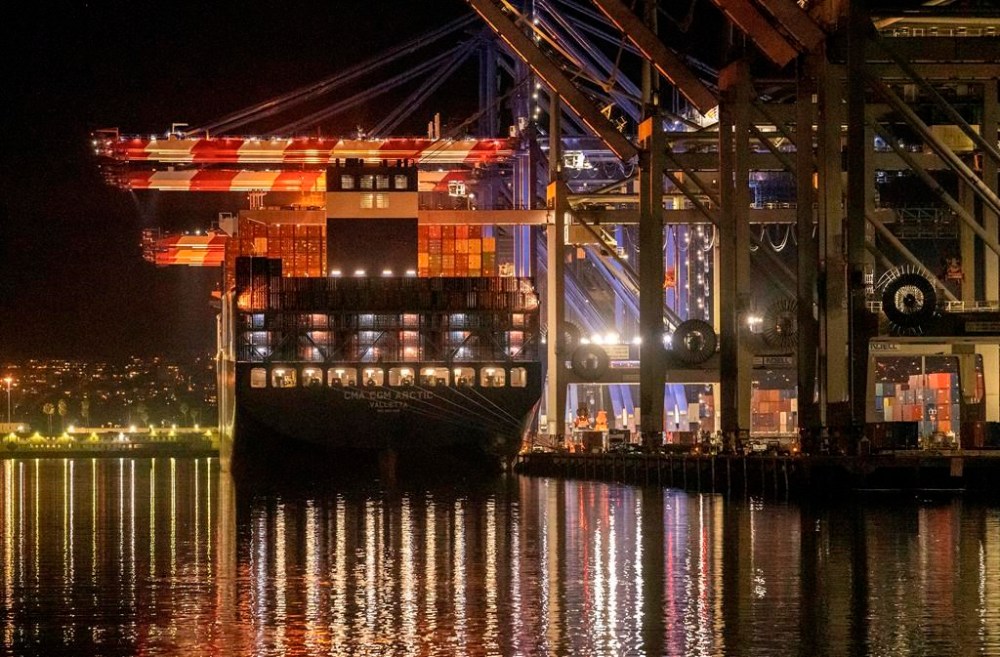
FILE - The Container ship Cam Cgm Arctic (MT) is moored at Maersk APM Terminals Pacific, Pier 400, at the Port of Los Angeles on Monday, Nov. 21, 2022. On Thursday, the Commerce Department issues its first of three estimates of how the U.S. economy performed in the fourth quarter of 2022. (AP Photo/Damian Dovarganes, File)

Despite a likely second straight quarter of expansion, the economy is widely expected to slow and then slide into a recession sometime in the coming months as increasingly high interest rates, engineered by the Federal Reserve, take a toll. The Fed’s rate hikes have inflated borrowing costs for consumers and businesses, from mortgages to auto loans to corporate credit.

The housing market, which is especially vulnerable to higher loan rates, has been badly bruised: Sales of existing homes have dropped for 11 straight months. Investment in housing plunged at a 27% annual rate from July through September.

And consumer spending, which fuels roughly 70% of the entire economy, is likely to soften in the months ahead, along with the still-robust job market. The resilience of the labor market has been a major surprise. Last year, employers added 4.5 million jobs, second only to the 6.7 million that were added in 2021 in government records going back to 1940. And last month’s unemployment rate, 3.5%, matched a 53-year low.

But the good times for America’s workers aren’t likely to last. As higher rates make borrowing and spending increasingly expensive across the economy, many consumers will spend less and employers will likely hire less.

Last year, the Fed raised its benchmark rate seven times in unusually large increments to try to curb the spike in consumer prices. Yet another Fed rate hike, though a smaller one, is expected next week.

The central bank has been responding to an inflation rate that remains stubbornly high even though it has been gradually easing. Year-over-year inflation was raging at a 9.1% rate in June, the highest level in more than 40 years. It has since cooled — to 6.5% in December — but is still far above the Fed’s 2% annual target.

Another threat to the economy this year is rooted in politics: House Republicans could refuse to raise the federal debt limit if the Biden administration rejects their demand for broad spending cuts. A failure to raise the borrowing cap would prevent the federal government from being able to pay all its obligations and could shatter its credit.

Moody’s Analytics estimates that the resulting upheaval could wipe out nearly 6 million American jobs in a recession similar to the devastating one that was triggered by the 2007-2009 financial crisis.

At least the economy is likely beginning the year on firmer footing than it did at the start of 2022. Last year, the economy shrank at an annual pace of 1.6% from January through March and by a further 0.6% from April through June. Those two consecutive quarters of economic contraction raised fears that a recession might have begun.

But the economy regained strength over the summer, propelled by resilient consumer spending and higher exports. It expanded at an unexpectedly strong 3.2% annual pace from July through September.

Adblock test (Why?)


US economy likely slowed but still posted solid growth in Q4 - Winnipeg Free Press
Read More

2 in 3 Canadians say the economy is doing poorly: poll - CTV News

A new survey from Research Co. shows that most of Canadians are not happy with the current economy and that their financial status have worsened over the past six months.

As many as 62 per cent of respondents described current economic condition in Canada as “bad” or “very bad”, up five points since Research Co. conducted a similar story in July 2022. In addition, just 35 per cent of Canadians (down five points) rate the economic conditions tight now as “very good” or “good”.

When it comes to their own personal finances, 51 per cent of respondents described their personal finances as “very good” or “good,” which is down six points, while 47 per cent (up six points) defined them as “poor” or “very poor.”

Breaking down the data by province, 27 per cent of Alberta residents said they hold a positive view of the Canadian economy, while 28 per cent of Saskatchewan and Manitoba residents and 29 per cent of Atlantic Canadians said they feel the same way.

Meanwhile, 37 per cent of Ontario residents, 35 per cent of people in British Columbia and 41 per cent of Quebec respondents said they have a positive perspective towards economic condition.

Nearly half of Canadians (44 per cent) said they are pessimistic over the national economic stability and expect the national economy to decline over the nest six months while only 13 per cent predict an improvement.

“Most Canadians aged 55 and over (51 per cent) think an economic recovery in the next six months is unattainable,” Mario Canseco, President of Research Co. said. “The proportions are lower among their counterparts aged 35-to-54 (43 per cent) and aged 18-to-34 (38 per cent).”

More than half of Canadians (52 per cent) said they are worried “frequently” or occasionally” about the value of their investments and their savings safety.

The survey also found that 37 per cent of Canadians have “frequently” or “occasionally” expressed concerned about unemployment affecting their households, while 34 per cent expressed the same feeling about paying their mortgage and 29 per cent feel the same way about their employer running into serious financial trouble.

Most respondents also believe that certain items prices will go higher in the nest six months. For example, 85 per cent of Canadians believe a week’s worth of groceries will be more expensive while 67 per centfeel the same way for a new car price.

The survey also included respondents about whether they believe the prime minister is doing the right thing to help the economy. Of the respondents, 42 per cent said they trust Justin Trudeau, while the ratings are lower (34 per cent) for Bank of Canada governor Tiff Macklem. Fewer people (33 per cent) trust the Conservative Leader Pierre Poilievre to do the right thing to help the economy.

METHODOLOGY

The results are based on an online study conducted from Jan, 13 to 15, 2023, among 1,000 adults in Canada. The data has been statistically weighted according to Canadian census figures for age, gender and region. The results are considered accurate within +/- 3.1 percentage points, 19 times out of 20.

Reporting for this story was paid for through The Afghan Journalists in Residence Project funded by Meta.

Adblock test (Why?)


2 in 3 Canadians say the economy is doing poorly: poll - CTV News
Read More

3 Consumer Staples Companies for a Challenging... - Morningstar.ca

The slowing global economy has greatly impacted businesses across sectors and industries. However, consumer staples companies are generally well-positioned to navigate near-term economic turbulence whipped up by high inflation, rising interest rates, and a slowdown in consumer spending.

While these challenges could stymie their operating performance in 2023, Morningstar’s ‘Global 2023 Outlook’ report assures “the consumer staples companies within our portfolio have ample headroom [and] should generally be able to pass through most cost increases and exercise capital management in a balanced manner.”

The following consumer staples names should enjoy steady sailing through the challenging macroeconomic headwinds by responding to inflation with further pricing increases, which will be the primary driver of revenue growth in 2023.

Ingredion (INGR) is a global company that produces ingredients for various industries such as food, beverage, paper, and personal care. Sweeteners, including syrups, maltodextrins, dextrose, and polyols, make up around 35% of sales while starches, used for food and industrial use, account for around 45% of sales. The majority of its sales come from outside the U.S., especially from developing markets such as Latin America and Asia-Pacific.

The company’s products fall into two main categories: “core” and “specialty” ingredients. “The company's long-term goal is for specialty ingredients to generate 38% of sales (from 30% currently) and nearly 60% of profits (from 50% now),” says a Morningstar equity report, noting that the firm has been investing aggressively in specialty ingredients, starch-based texturizers, plant-based proteins used in alternative meat products, and specialty sweeteners such as stevia and allulose.

Since specialty ingredients are value-added and require proprietary formulations, “they typically command at least twice the gross margins and double the price of core ingredients,” says Morningstar strategist, Seth Goldstein, who puts the stock’s fair value at US$120, stressing that specialty ingredients volume will continue to proportionately displace core volume.

Core ingredients are typically commodity-grade, providing no pricing power for Ingredion, and are projected to grow at a low-single-digit rate, compared to mid-to-high single-digit growth for specialty ingredients volumes, says Goldstein.

While the company lacks cost advantage, its posses two moat sources in intangible assets and switching costs, particularly in its specialty ingredients business.

Leading warehouse club, Costco (COST) has 838 stores worldwide where customers pay to shop for a limited selection of low-priced products. The majority of its sales come from the U.S. (73%) and Canada (14%). It primarily targets individual shoppers, but almost 20% of its customers hold business memberships. Food and sundries account for 39% of sales while non-food merchandise (27%), ancillary businesses such as fuel and pharmacy (21%), and fresh food (13%) make up the rest. Around 7% of Costco's global sales come from e-commerce.

“With a besotted member base, low-frills warehouses, and growth opportunities at home and abroad, we expect Costco’s durable competitive advantages to lead to consistent, strong performance despite retail’s upheaval,” says a Morningstar equity report.

While competition is intensifying, Costco’s cost leverage, procurement strength, and top-class store efficiency should allow it to keep traffic high.

“With ample opportunity to expand globally, we expect Costco to post consistently strong returns even as it grows,’ says Morningstar equity analyst Zain Akbari, who recently lifted the stock’s fair value to US$476 from US$454, incorporating strong fourth-quarter earnings.

The company’s membership renewal rates in the U.S. and Canada have remained at roughly 90%, defying strong headwinds including a financial crisis, the expansion of Amazon’s Prime offering, a credit card provider switch, fee increases, and the COVID-19 outbreak.

The retail sector’s lack of switching costs and intense competition hamper the development of sustainable competitive advantages. However, Costco has achieved a wide economic moat based on its intangible assets and cost advantage, Akbari adds.

Constellation Brands (STZ) is the leading supplier of multiple types of alcohol in the United States. Its brand portfolio includes such popular Mexican beers as Corona and Modelo, which they acquired from AB InBev with exclusive and permanent rights for the U.S. market. Constellation imports most of its products from abroad and distributes them through independent wholesalers. The company also owns a 36% stake in Canopy Growth, a major cannabis company.

While Constellation Brands historically operated as a winery and distillery, the firm has now grown into one of the most stellar brewers across the globe. After acquiring U.S. rights to Corona and Modelo, “we see the firm’s overall Mexican beer portfolio as auspiciously situated at the confluence of unwavering secular and demographic trends,” says Morningstar equity analyst Jaime Katz, who recently upped the stock’s fair value to US$274 from US$267, incorporating second-quarter results that included sales growth of 15% for beer and 1% for wine and spirits, outperforming estimates.

With an enviable growth profile and best-of-breed margins, the beer business can thrive even amid an evolving industry landscape, says Katz.

The firm benefits from the continued rise of political, social, and cultural clout of the Hispanic population in the U.S., enhancing Constellation’s intangible assets. “The firm is not resting on its laurels, however, as it continues to expand its addressable market by widening the gamut of categories in which it competes,” argues Katz. 

The firm’s wide moat is built on its stable of brands that, together with geographical, political, and demographic factors, “create a sublime set of intangible assets,” she adds.

Adblock test (Why?)


3 Consumer Staples Companies for a Challenging... - Morningstar.ca
Read More

Carney touts B.C. port expansion plan to strengthen independence, diversify economy - Toronto Star

[unable to retrieve full-text content] Carney touts B.C. port expansion plan to strengthen independence, diversify economy    Toronto Star ...