Rechercher dans ce blog

Thursday, March 24, 2022

Panicked Russians Don't Buy Official Advice That Economy Is Fine - BNN

(Bloomberg) -- As Russians have turned to panic-buying in the wake of President Vladimir Putin’s invasion of Ukraine, one item remains in plentiful supply -- official reassurances that everything is under control.

The government has rushed out near-daily declarations that essential staples remain plentiful in an economy blindsided by war and sweeping international sanctions.

Food? Nothing to worry about, said Agriculture Minister Dmitry Patrushev. There’s an abundance of diapers and sanitary pads, according to the Industry and Trade Ministry. No deficit of fever-reducing drugs either. As for flour, St. Petersburg has enough.

But the word isn’t getting through. 

With price pressures already building before the war and global supply chains under strain, Russians are now contending with the new reality of economic isolation by hoarding more than common doomsday shopping favorites. 

Bags of sugar from major companies have been out of stock on some websites, replaced by no-name brands selling at three times the price. Sanitary towels, diapers, pet food and coffee capsules are among other goods in high demand, with local items produced by international companies or with imported materials growing especially scarce.

Russia is on track for one of the deepest recessions in its modern history after the ruble crashed and commerce seized up as foreign suppliers of everything from food to cars limit or stop doing business in the country. Although officials acted quickly to head off a bank run and restore some calm in financial markets with capital controls and an emergency interest-rate hike, they have no quick fix for the consumer frenzy.

A March 15-22 survey found that a quarter of Russians stocked up for the future in recent days, largely by buying non-perishables like pasta and household chemicals. 

Weekly numbers compiled by Russia’s biggest lender, Sberbank, show consumer spending has been increasing at an annual pace of as much as 25% this month, compared with single-digit increases before the invasion.

“It will take a very long time for the Russian economy to adapt to the situation,” Ksenia Mishankina, a research analyst with Loomis, Sayles & Co., said in an email. “Despite the government’s efforts over the years aimed at weaning Russia off a reliance on imported medicines, the impact has been limited.”

At stake is the ability of Russia’s economy to muddle through as Putin’s military offensive in Ukraine enters its second month. Before the war, the country counted on consumer spending for more than half of all economic activity.

Authorities have set margin limits for essential goods and Russian retailers including X5 Retail Group restricted purchases of “socially important” food items earlier this month following reports of hoarding. 

Still, inflation has shown little sign of letting up. Some economists forecast it may reach as high as 25%, a level not seen in Russia since the government’s 1998 debt default. 

In a flashback to the Soviet era, the panic buying has emptied shelves, increasingly putting supply under pressure. One online seller said the cost of office paper has risen as much as five times since last month.

Medicine prices are meanwhile rising up to 40%, according to Russia’s health watchdog. Russian doctors see shortages of more than 80 drugs including Nurofen for children, according to a survey. 

What Our Economists Say:

“The sanctions shock to supply is pushing up prices much faster than we’d expect from the plunge in the ruble. The initial burst might be driven by outright shortages as well as panic buying, but inflation could accelerate for months as the disruption ripples through supply chains.”

--Scott Johnson.

Other niches of the market are easier to replenish, a reflection of a changing trade landscape as Putin redraws alliances. Russia’s safety watchdog allowed to resume shipments of some fruits from five countries, including China on March 5.

Hygiene products are another case in point, after Always sanitary pads producer Procter & Gamble reduced its business in Russia. It’s hardly making every consumer happy.

“Shop shelves are now full of sanitary napkins from brands I don’t know with names in Chinese characters, sometimes at double the price that Always or Libresse were just weeks ago,” said Larisa, a 46-year-old housewife in Lipetsk south of Moscow. 

©2022 Bloomberg L.P.

Adblock test (Why?)


Panicked Russians Don't Buy Official Advice That Economy Is Fine - BNN
Read More

Economy misses fourth-quarter estimates, but has record year - Buenos Aires Times

Argentina’s economy grew less than expected in the fourth quarter but still had its best year since 2004 as the country emerged from a long and deep recession exacerbated by the pandemic.

Gross domestic product expanded 1.5 percent in the final three months of the year from the previous quarter, below economists’ expectations for 1.7 percent growth. GDP rose 10.3 percent in 2021, the best performance since the series began in 2004, according to data from the nation’s economic statistics bureau published Wednesday. 

The unemployment rate fell to seven percent, its lowest level since 2015, according to separate official data also published Wednesday. Salaried employment in the private sector has almost completely recouped losses seen during the pandemic, adding 188,000 jobs last year. 

South America’s second-largest economy had been enjoying annual growth rates of about 10 percent in the past few months as it recovers from a very low base following a recession that started in 2018. Yet consumer prices rising more than 50 percent a year have largely eclipsed such gains, prompting President Alberto Fernández to recently declare “war on inflation.” The Central Bank on Tuesday raised its key interest rate to 44.5 percent.

Argentina’s recovery gained steam in the second half of 2021, when an accelerated vaccination campaign allowed the economy to safely reopen after months of strict lockdown. Investment and public consumption drove growth in the fourth quarter, compared with the previous three months.

Growth is now expected to cool down. The government forecast activity to expand between 3.5 percent and 4 percent this year in a staff-level agreement to reschedule over US$40 billion in debt payments with the International Monetary Fund. But private economists surveyed by the Central Bank in February see more modest growth of three percent for 2022, even before taking into account the impact that Russia’s invasion of Ukraine is having on commodity prices and inflation.

by Patrick Gillespie, Bloomberg

Adblock test (Why?)


Economy misses fourth-quarter estimates, but has record year - Buenos Aires Times
Read More

Wednesday, March 23, 2022

A Strong and Growing Economy | Budget 2022-23 - Government of Saskatchewan

Government is committed to its Growth Plan goals of a strong economy, a growing province and new jobs over the next decade. As Saskatchewan emerges from the pandemic, the province's resurgent economy is strengthened further by key investments.

  • An $8.0 million increase, bringing total funds available to $10 million, will be provided for the Creative Saskatchewan Production Grant Program for film and television.
  • The Saskatchewan Indigenous Investment Finance Corporation (SIIFC) will be established in 2022-23. The SIIFC will offer $75 million in loan guarantees for private-sector lending to Indigenous communities and organizations for investments into natural resource and value-added agriculture projects.
  • $3.1 million to fully fund Saskatchewan's international trade and investment strategy, with new office locations in the United Kingdom, United Arab Emirates, Mexico and Vietnam.
  • Saskatchewan's favourable investment climate has resulted in $13.6 billion in new private investment in major projects, expected to create 9,000 construction jobs and 2,330 permanent jobs.

Adblock test (Why?)


A Strong and Growing Economy | Budget 2022-23 - Government of Saskatchewan
Read More

Argentina Economy Misses Fourth-Quarter Estimates, But Has Record Year - BNN

(Bloomberg) -- Argentina’s economy grew less than expected in the fourth quarter but still had its best year since 2004 as the country emerged from a long and deep recession exacerbated by the pandemic.

Gross domestic product expanded 1.5% in the final three months of the year from the previous quarter, below economists’ expectations for 1.7% growth. GDP rose 10.3% in 2021, the best performance since the series began in 2004, according to data from the nation’s economic statistics bureau published Wednesday. 

The unemployment rate fell to 7%, its lowest level since 2015, according to separate official data also published Wednesday. Salaried employment at the private sector has almost completely recouped losses seen during the pandemic, adding 188,000 jobs last year. 

South America’s second-largest economy had been enjoying annual growth rates of about 10% in the past few months as it recovers from a very low base following a recession that started in 2018. Yet consumer prices rising more than 50% a year have largely eclipsed such gains, prompting President Alberto Fernandez to recently declare “war on inflation.” The central bank on Tuesday raised its key interest rate to 44.5%.

Read More: Stiglitz Chided After Praising Argentina’s ‘Miracle’ Economy

Argentina’s recovery gained steam in the second half of 2021, when an accelerated vaccination campaign allowed the economy to safely reopen after months of strict lockdown. Investment and public consumption drove growth in the fourth quarter, compared with the previous three months.

Growth is now expected to cool down. The government forecast activity to expand between 3.5% and 4% this year in a staff-level agreement to reschedule over $40 billion in debt payments with the International Monetary Fund. But private economists surveyed by the central bank in February see more modest growth of 3% for 2022, even before taking into account the impact that Russia’s invasion of Ukraine is having on commodity prices and inflation.

©2022 Bloomberg L.P.

Adblock test (Why?)


Argentina Economy Misses Fourth-Quarter Estimates, But Has Record Year - BNN
Read More

Tuesday, March 22, 2022

LETTER: A strong forest sector is essential to B.C.’s strong economy - Peace Arch News

B.C.’s jobs minister recently addressed the issue of pandemic recovery in northern communities and suggested more people are working today than prior to the pandemic. What wasn’t addressed in any meaningful way is the very real impact of thousands of potential job losses in the forest sector because of government policy changes that include vast and immediate deferrals of B.C.’s operating forest land base, and concurrent sweeping regulatory changes putting thousands of forest workers at risk with consequential impacts to forest dependent communities.

RELATED:B.C. outlines recovery plan for northern communities

Mr. Kahlon suggests a future challenge will be creating opportunities for those who will lose their jobs in the forest sector and ensure they have access to skills training so they may be able to take employment opportunities in other industries.

The challenge is incredibly understated. Forestry jobs support families and communities with a living wage that is 60% higher than the provincial average. The impact of these job losses will be immense to each family that is affected, directly and indirectly on businesses, and to the economies of resource communities like Prince George.

The minister also suggested the way we have been harvesting our forests is not sustainable when he should know better. For decades, B.C. has proudly had more independently certified forests than anywhere else in the world and its own government’s chief forester who sets that allowable annual cut.

We understand and support the desire by government to establish a new vision for forestry and address society’s expectations of B.C.’s forest management, particularly when it comes to establishing a real partnership between industry and First Nations. However, we have serious concerns about what appears to be a sense that thousands of forest sector jobs can be eliminated and there won’t be significant financial and social implications.

Natural resources account for more than 50% of B.C.’s economic base, and forestry leads all other sectors in contributing 18% to B.C.’s economy, supporting vital government services and programs for all British Columbians.

While British Columbia enjoys the luxury of a strong economy today, we all know it’s cyclical and there will come a time when the economy will require all sectors to be firing at capacity – and it is then that the decisions being made today may come back to haunt us.

A strong forest sector is essential to B.C.’s strong economy, today and in the future.

Bob Brash

Registered Professional Forester and Executive Director of the Truck Loggers Association of BC

Letters to the editor

Adblock test (Why?)


LETTER: A strong forest sector is essential to B.C.’s strong economy - Peace Arch News
Read More

Letter: A strong forest sector is essential to BC’s strong economy - Trail Times

Dear Editor:

B.C.’s jobs minister recently addressed the issue of pandemic recovery in northern communities and suggested more people are working today than prior to the pandemic. What wasn’t addressed in any meaningful way is the very real impact of thousands of potential job losses in the forest sector because of government policy changes that include vast and immediate deferrals of B.C.’s operating forest land base, and concurrent sweeping regulatory changes putting thousands of forest workers at risk with consequential impacts to forest dependent communities.

RELATED:B.C. outlines recovery plan for northern communities

Mr. Kahlon suggests a future challenge will be creating opportunities for those who will lose their jobs in the forest sector and ensure they have access to skills training so they may be able to take employment opportunities in other industries.

The challenge is incredibly understated. Forestry jobs support families and communities with a living wage that is 60% higher than the provincial average. The impact of these job losses will be immense to each family that is affected, directly and indirectly on businesses, and to the economies of resource communities like Prince George.

The minister also suggested the way we have been harvesting our forests is not sustainable when he should know better. For decades, B.C. has proudly had more independently certified forests than anywhere else in the world and its own government’s chief forester who sets that allowable annual cut.

We understand and support the desire by government to establish a new vision for forestry and address society’s expectations of B.C.’s forest management, particularly when it comes to establishing a real partnership between industry and First Nations. However, we have serious concerns about what appears to be a sense that thousands of forest sector jobs can be eliminated and there won’t be significant financial and social implications.

Natural resources account for more than 50% of B.C.’s economic base, and forestry leads all other sectors in contributing 18% to B.C.’s economy, supporting vital government services and programs for all British Columbians.

While British Columbia enjoys the luxury of a strong economy today, we all know it’s cyclical and there will come a time when the economy will require all sectors to be firing at capacity – and it is then that the decisions being made today may come back to haunt us.

A strong forest sector is essential to B.C.’s strong economy, today and in the future.

Bob Brash is a Registered Professional Forester and Executive Director of the Truck Loggers Association of BC

Letters to the editor

Adblock test (Why?)


Letter: A strong forest sector is essential to BC’s strong economy - Trail Times
Read More

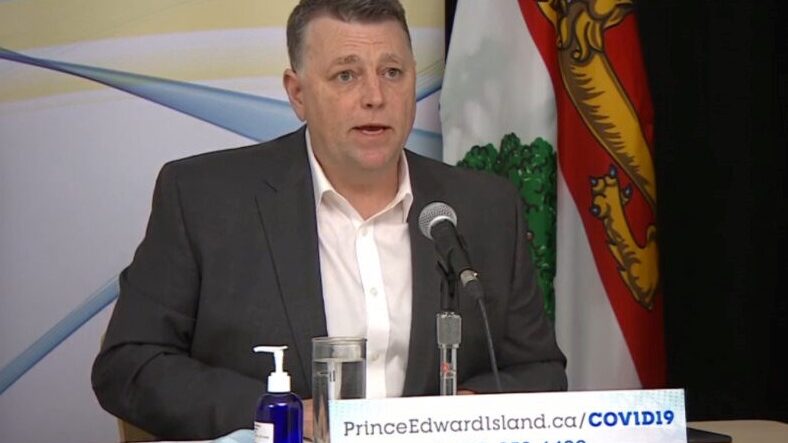
PEI Premier Dennis King On Growing The Province's Population And Economy - Huddle Today

Reading Time: 2 minutes

David Campbell is a Moncton-based economic development consultant and co-host of the Huddle podcast, Insights. The following piece was originally published on his blog, It’s the Economy, Stupid!, on Substack.

It’s been a treat for Don Mills and me to interview the Atlantic Premiers on our Huddle “Insights” podcast.

Someone asked me why we threw so many softballs at Premier Dennis King, who we interviewed last week in the first of a four-part series. I think that’s unfair, although I would say we certainly were not playing “gotcha” with the premiers. Our goal was to ask them what they are doing to strengthen their economies, grow the population and address some of the big other challenges such as health care and education.

I hadn’t met Premier King before and I was impressed. He has an ambitious agenda for the province and wants to continue the positive trends in immigration and the growth of key sectors such as biosciences. And, he has very ambitious plans for the cleantech sector – seeing it as potentially another biosciences-like success story. We recommended he clone Rory Francis if the technology allows.

RELATED: Rory Francis Talks About How Bioscience Will Become A Billion-Dollar Sector In P.E.I.

You will see that ambition is a consistent theme across the Atlantic premiers. They have a vision of where the provinces should go and what seem to be pretty good ideas on how to get there.

There also seems to be a desire for greater Atlantic cooperation which is good as the region shares many common challenges. Strengthening regional economic integration doesn’t dilute the character and culture of the four provinces; it is just a recognition that for many things we are better together.

I still can’t get the words of one senior bureaucrat out of my head from 2015 saying we are just going to have to get used to 0.5 per cent economic growth. When I pushed he said immigrants won’t stay here. Natural resources will wane and we will be left with primarily a local services-focused economy even more reliant on federal transfers.

Premier King has a different idea in mind. P.E.I. has been among the fastest-growing provinces by population growth. Depending on the timeframe, they are either first or second in the growth of the value of exports. Yes, they have struggled to retain some of their immigrants but enough have stayed to add 8 per cent to the population between 2016-2021 – the most added to the provincial population in a Census period ever.

I hope you enjoy the conversation.

You can listen to the podcast in the player above, or download it on podcast platforms like Apple and Spotify.

Adblock test (Why?)


PEI Premier Dennis King On Growing The Province's Population And Economy - Huddle Today
Read More

Carney touts B.C. port expansion plan to strengthen independence, diversify economy - Toronto Star

[unable to retrieve full-text content] Carney touts B.C. port expansion plan to strengthen independence, diversify economy    Toronto Star ...