Rechercher dans ce blog

Sunday, March 3, 2024

Ali Hassan Mwinyi: the Tanzanian former president who oversaw the transition to market economy - The Conversation

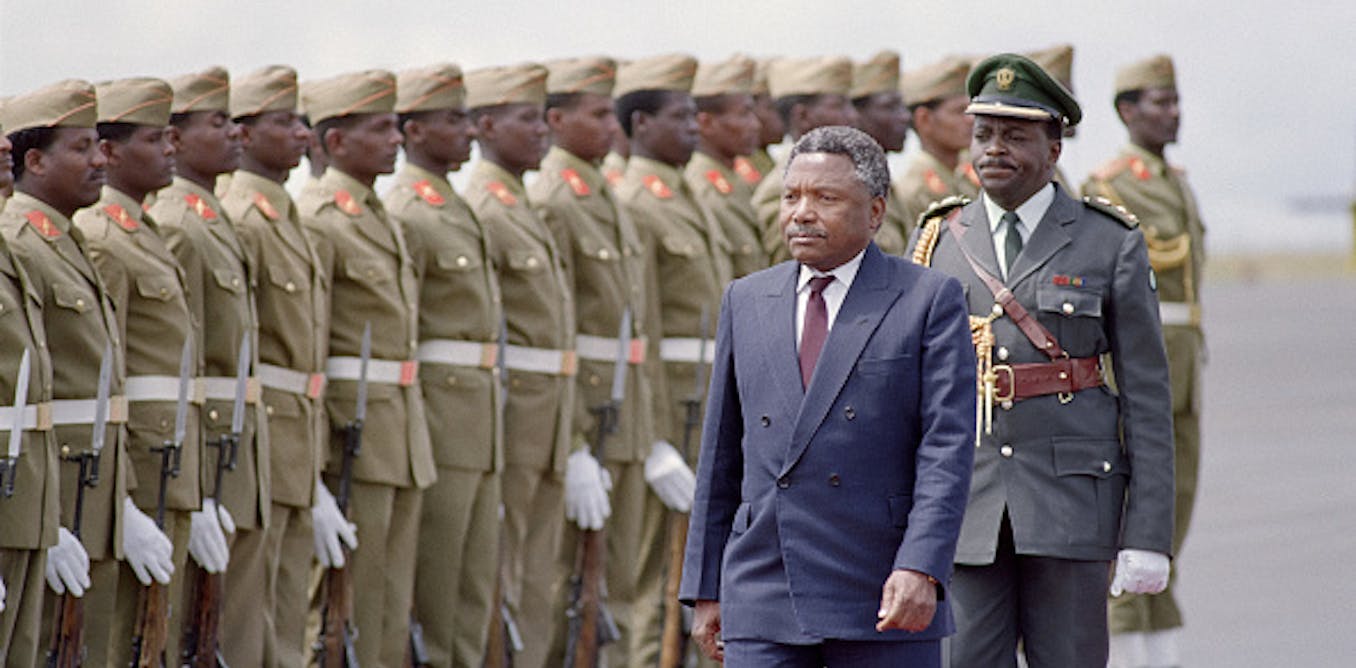
Ali Hassan Mwinyi, Tanzania’s second president who has died aged 98, pushed through tough economic and political reforms that transformed the East Africa nation from socialism to an open economy and a multi-party democracy. He was president from 1985 to 1995.

He did all of this in the shadow of Julius Nyerere who had led Tanzania since independence in 1961 and turned the country into a one-party socialist state. Tanganyika joined together with Zanzibar in 1964 to form the United Republic of Tanzania. Nyerere stepped down in 1985 but remained chairman of the party that had ruled Tanzania since independence.

Mwinyi’s presidency was always going to be a test, coming at a difficult period. The country was in a serious economic turmoil. Nyerere had admitted that the Ujamaa policy – Tanzania’s socialist experience – had failed. Nyerere decided it was time the country tried another leader. He stepped aside in 1985. During that period, the country had experienced drought, the impacts of the oil shocks and the Kagera War, which Tanzania fought to oust Uganda’s dictator Idi Amin.

As a political science scholar, I have studied the politics, political parties and democratisation of Tanzania and Zanzibar in the last 10 years. It is my view that it took Mwinyi’s careful balancing act to ward off Nyerere’s influence after taking the presidency. He had to take bold decision amid the shadow of Mwalimu Nyerere who remained as the chairman of the ruling party CCM.

Mwinyi will be remembered for steadying the economic ship and setting ground for President William Mkapa to consolidate economic liberalisation. Although there are controversies as to whether he was truly a Zanzibari. This notwithstanding, his elevation as the first Zanzibari Union president somewhat helped to ease the Union tensions. In the postscript of his memoir, Mwinyi reflects on several issues and prided his legacy on the economic reforms he initiated.

Early life

A trained teacher, Mwinyi was born on 8 May 1925 in Mkuranga, Coast region, Tanzania Mainland. Between 1933 and 1942, he attended primary school at Mangapwani and Dole – Zanzibar. He studied for Diploma in Education from 1954 to 1956 at the University of Adult Education in Dublin, United Kingdom. He specialised in English and Arabic languages. He taught at Mangapwani and Bumbwini schools in Zanzibar. He later served as an ambassador, and minister in various government ministries before becoming president of Zanzibar.

A rank outsider, Mwinyi’s elevation to the presidency of Tanzania was rather fortuitous. Nyerere had other preferred successors. Aboud Jumbe, the man who Mwinyi succeeded as president of Zanzibar in 1984 was Nyerere’s preferred successor. Nyerere had always wished a Zanzibari to succeed him as a way of galvanising the Union which was formed in 1964. However, the tense political period between 1983 and 1984 culminated with Jumbe falling out of favour, and being kicked out as the president of Zanzibar and as vice president of the Union government. By virtue of being president of Zanzibar and vice president of the Union, Mwinyi became Nyerere’s compromise successor. Nyerere had described Mwinyi as honest, humble, and a loyal socialist.

The reforms

Mwinyi was not a socialist. At the time he was taking over as president of Tanzania, Mwinyi compared himself to an anthill, succeeding the colossal socialist ideologue. He carefully negotiated and struck a balance between loyalty to Nyerere and driving the reforms. Chief among his reforms was re-initiating negotiations with the World Bank and the International Monetary Fund – two institutions Nyerere had fallen out with. These negotiations meant that Tanzania was transitioning to a liberal market-led economy.

During Mwinyi’s first term in office, he launched the three-year Economic Recovery Program in 1986. The aim was to spur positive growth, reduce inflation and restore sustainable balance of payments.

With this programme, there was an upturn in the country’s economy with the GDP growing at an average rate of 3.9% compared, to 1% during the 1980-1985 period. There was also a 4.8% increase in agricultural productivity, a 2.7% upsurge in manufacturing as well as a significant growth in external investment. The downside to these reforms was the rise in corruption and misappropriation of public funds. These economic reforms necessitated political reforms. President Mwinyi was able to rally the ruling CCM party, which was reluctant to accept International Monetary Fund and World Bank conditions.

In 1992, the Mwinyi administration acceded to constitutional amendments with a return to multiparty politics.

Foreign policy

Mwinyi also changed Tanzania’s foreign policy. Tanzania had modelled itself as a champion of pan-Africanism and African liberation. This was the key pillar of the country’s post-independent foreign policy.

In line with Tanzania’s position regarding apartheid South Africa, Mwinyi called for tough sanctions as a means of defeating white minority rule.

The transition from Nyerere to Mwinyi in 1985 heralded a new foreign policy with major conflicts in the Great Lakes Region. As President Mwinyi was settling into his second term, conflicts in the Great Lakes began, with Tanzania feeling the need to act as a mediator. In the 1990s, Tanzania was the key facilitator in the Rwanda domestic crisis. The Rwanda Genocide of 1994 had immediate impact on Tanzania with massive inflows of refugees.

President Mwinyi admitted in his autobiography that the Rwanda Genocide was one of his greatest foreign policy challenges. He recalled the circumstances leading to the events of 6 April 1994, the start of the genocide. He had called for the meeting to discuss the peace and security in Burundi and Rwanda in Dar es Salaam.

After the meeting ended, Burundian President Cyprien Ntaryamira and Rwandan President Juvenal Habyarimana left in one plane which was shot down, sparking off the genocide in Rwanda. Tanzania received many refugees fleeing the killings. In 1995, Tanzania’s city of Arusha became host of the UN backed International Criminal Tribunal for Rwanda to investigate those charged with genocide. During Mwinyi’s second term in office, plans to revive the East African Community began with the signing of an agreement to establish the permanent commission for East African Cooperation in 1993. This process culminated with reformalisation of the East African Community in 2000.

But it is Mwinyi’s contribution to liberalisation that will be his enduring legacy.

Adblock test (Why?)


Ali Hassan Mwinyi: the Tanzanian former president who oversaw the transition to market economy - The Conversation
Read More


Saturday, March 2, 2024

Xi Jinping's 'New Productive Forces' Don't Add Up - Bloomberg

The Chinese Communist Party loves slogans, as this newsletter has observed before. In the coming week’s annual convocation of China’s legislature, watch for repeated endorsements of “new productive forces.”

In the run-up to the National People’s Congress (NPC), the party’s Politburo declared, “it is imperative to boost the endeavors to modernize the industrial system, and accelerate the development of new productive forces.” State-run news agency Xinhua touted that entrepreneurs are eyeing the theme with enthusiasm, that the “forces” are “spurring revival of northeast China,” and even how “green productive forces” are emerging.

Adblock test (Why?)


Xi Jinping's 'New Productive Forces' Don't Add Up - Bloomberg
Read More

Opinion: Why is Canada's economy stuck in the last century? - The Globe and Mail

Open this photo in gallery:

Wide sweep of Bay Street in Toronto, looking north from Front Street towards City Hall, 1902. Photo by Alexander Galbraith (Galbraith Collection).Alexander Galbraith

John Rapley is an author and academic who divides his time among London, Johannesburg and Ottawa. His books include Why Empires Fall (Yale University Press, 2023) and Twilight of the Money Gods (Simon and Schuster, 2017).

Whatever one makes of the glee with which Americans chase the latest economic fads, like the AI bubble, you can’t help but admire their endless capacity for reinvention. Theirs is an economy always looking to the future.

Turn the lens north to Canada, though, and a different picture emerges. To get a sense of it, you can start by looking at the weighting in the stock markets. In the U.S., tech and tech services account for 35 per cent of market cap. Throw in health technology, which includes medical and pharmaceutical research, and these sectors at the frontiers of innovation account for close to half of total market capitalization.

In Canada, in contrast, tech accounts for barely 10 per cent of the total market. The country’s research performance reflects this distance from the cutting edge. Despite being one of the world’s biggest per capita spenders on higher education, Canada punches below its weight in the production of new patents. When it comes to new research and development spending, Canada lags most developed countries, and its corporate sector is the biggest laggard of all, suggesting an economy with a concentration in legacy industries.

In fact, that’s largely the profile Canada has. Unlike the tech-heavy U.S. market, fully a quarter of our market cap comprises energy and mining stocks. Add in banks and that total reaches half. In short, we’re a nation that to a substantial degree still lives off the land then recycles its profits – largely, in recent years, into a housing bubble that has itself sapped the economy of dynamism.

Some might say this doesn’t matter, that given Canada’s rich endowment in natural resources, it makes sense to build the economy atop exports of energy and minerals. Moreover, the rapid growth of the developing world and the global energy transition will in the coming years generate huge demand for oil, natural gas and the minerals needed for renewable-energy infrastructure. Many analysts thus expect a long commodity supercycle to begin, one that should fill Canada’s export coffers anew. You can thus understand why some think the best thing for government to do is get out of the way and let businesses get on with the task of making money.

But this model is starting to look a bit long in the tooth. If you think of commodity supercycles as waves, each crests a bit lower than the last, the terms of trade steadily turning against primary exporters. Meanwhile, the start date of the next supercycle keeps getting postponed, with commodity prices currently still trending downward.

In any event, a commodity supercycle driven by the rise of countries such as India will mirror the last one, which was driven by China and peaked early this century. After frantically building out its industry and infrastructure, China did as other developed economies do and began shifting into services, slowing its demand for primary inputs. As the world develops, its energy intensity and demand for raw materials will similarly peak. Not only will each supercycle top out at a lower level than the previous one, they will probably come less often.

Canada doesn’t face an imminent crisis. But, lest we abandon future generations to their fate, we’d do well to avoid complacency while the surpluses that could fund the transition to a newer, more knowledge-based economy are still available. Consider some of our peers with similar resource endowments. Despite the huge breakthroughs the U.S. has made in hydraulic fracturing, catapulting itself to the top of the world table for natural gas exports, energy comprises a paltry 4 per cent of its market; throwing in the rest of mining and resource extraction still doesn’t reach 6 per cent. Instead, the U.S. is reallocating huge amounts of capital to engineer a transition to renewable energy. Similarly, Norway and Saudi Arabia, both of which depend more heavily than Canada on exports of energy, are nonetheless investing heavily in decarbonization and the development of new industries.

The world economy is changing rapidly. The likely choice facing Canada is to either get in the race or prepare for a long and eventually irreversible decline. Canada’s per-capita GDP has already begun falling, and if we’re not careful this could become a chronic condition. As an immensely rich country that has been favoured by both history and geography, Canada has the endowment of wealth that makes grand ambitions feasible. If it can continue to successfully integrate immigrants into its cultural fabric, as it has done in the past, it would be able to continually renew itself.

But the key question is, do Canadians have the desire to do it? Or has this economy, built for an earlier age, become a bit too comfortable for us to now want to change it?

Adblock test (Why?)


Opinion: Why is Canada's economy stuck in the last century? - The Globe and Mail
Read More

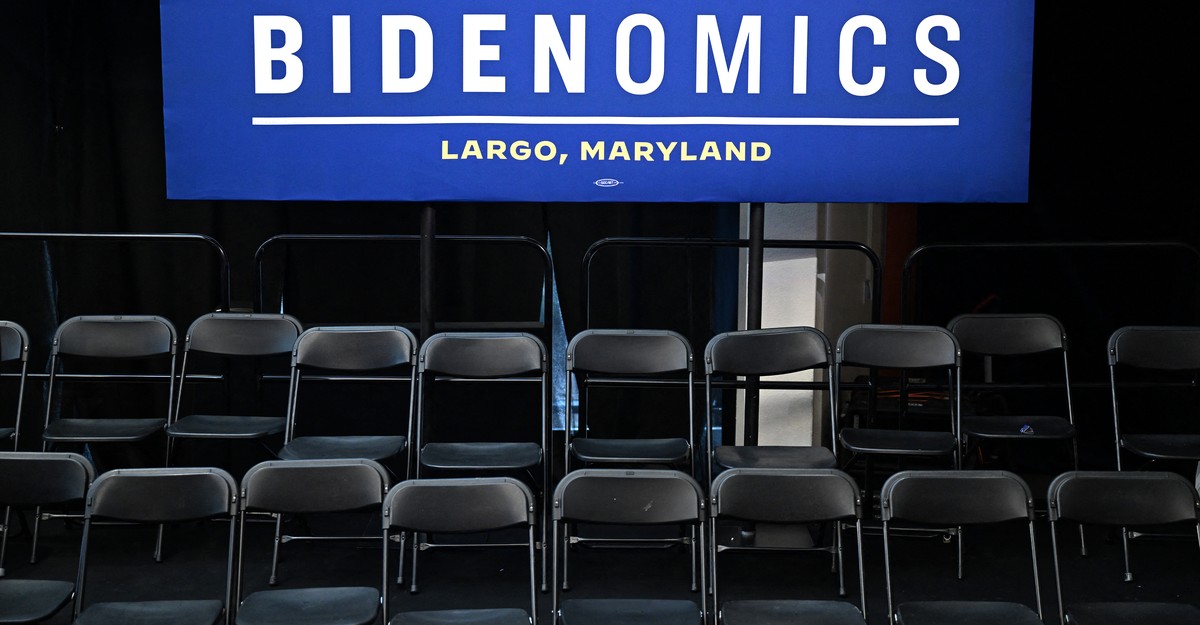
Why an Improving Economy Hasn’t Helped Biden - The Atlantic

Just since last November, the most closely watched measure of consumer confidence about the economy has soared by about 25 percent. That’s among the most rapid improvements recorded in years for the University of Michigan’s Index of Consumer Sentiment, even after a slight decline in the latest figures released yesterday.

And yet, even as consumer confidence has rebounded since last fall, President Joe Biden’s approval rating has remained virtually unchanged—and negative. Now, as then, a solid 55 percent majority of Americans say they disapprove of his performance as president in the index maintained by FiveThirtyEight, while only about 40 percent approve.

That divergence between improving attitudes about the economy and stubbornly negative assessments of the president’s performance is compounding the unease of Democratic strategists as they contemplate the impending rematch between Biden and former President Donald Trump. Most Democratic strategists I spoke with believe that brightening views about the economy could still benefit Biden. But many also acknowledge that each month that passes without improvement for Biden raises more questions about whether even growing economic optimism will overcome voters’ doubts about him on other fronts.

Doug Sosnik, the chief White House political adviser to Bill Clinton during his 1996 reelection, told me that if he was in the White House again today, “I would say I’m not that concerned” about improving economic attitudes not lifting Biden yet, “because this takes time.” But, Sosnik added, “if you come back to me in six weeks or two months and we haven’t seen any movement, then I’d start becoming very concerned.”

Historically, measures of consumer confidence have been a revealing gauge of an incumbent president’s reelection chances. Presidents Ronald Reagan, Clinton, and Barack Obama, as I’ve written, all saw their job-approval ratings tumble when consumer confidence fell early in their first terms amid widespread unease over the economy. But when the economy revived and consumer confidence improved later in their term, each man’s approval rating rose with it. Riding the wave of those improving attitudes, all three won their reelection campaigns, Reagan in a historic 49-state landslide.

By contrast, when Presidents Jimmy Carter and George H. W. Bush lost their reelection bids, declining or stagnant consumer confidence was an early augur of their eventual defeat. Collapsing consumer confidence amid the coronavirus pandemic in 2020 also foreshadowed Trump’s defeat, after sustained optimism about the economy had been one of his greatest political strengths during his first three years.

Polling leaves little doubt that since last fall, more Americans are starting to feel better about the economy. An index of economic attitudes compiled by the Gallup Organization recently reached its highest level since September 2021. Even after the small retreat in the latest numbers, the University of Michigan’s index is now at its highest level since the summer of 2021. A separate consumer-confidence survey conducted by the Conference Board, a business group, also slipped slightly in February but remains higher than its level last fall.

None of this, though, has yet generated any discernible improvement in Biden’s standing with the public. In fact, the recent Gallup Poll that documented the rise in economic optimism since last October found that Biden’s approval rating over the same period had fallen, from 41 to 38 percent—a single percentage point above the lowest mark Gallup has ever measured for him. The fact that consumer confidence has revived without elevating Biden’s ratings suggests “that impressions of his economic handling have been set and will likely be hard to change as he faces other struggles with perceptions of age and capacity,” the Republican pollster Micah Roberts told me.

Paul Kellstedt, a political scientist at Texas A&M University, told me that two big structural shifts in public opinion help explain why Biden has not benefited more so far from these green shoots of optimism.

One, Kellstedt said, is that the relationship is weakening between objective economic trends and consumer confidence. Compared with the days of Reagan or Clinton, more voters in both parties are reluctant to describe even a booming economy in positive terms when the other party holds the White House, Kellstedt noted. Given Biden’s record of overall economic growth and job creation, as well as the dramatic rise in the stock market, the consumer-confidence numbers, though improving, are still lower “than they should be based on objective fundamentals,” he told me.

Still, optimism about the economy has increased since last fall, not only among Democrats but also among independents and even Republicans, trends that have lifted previous presidents. That points to what Kellstedt calls the second structural challenge facing Biden: The relationship between voters’ attitudes about the economy and their judgments about the president is also weakening.

Amid these new patterns in public opinion, “a strengthening economy is not going to hurt Biden, of course, but how much it is going to help him is quite uncertain,” Kellstedt told me.

Political strategists in both parties believe another central reason Biden isn’t benefiting more from the many positive economic trends under his presidency is that so many Americans remain scarred by the biggest exception: the highest inflation in four decades. Although costs aren’t rising nearly as fast as they were earlier in Biden’s presidency, for many essentials, such as food and rent, prices remain much higher than when he took office.

Jay Campbell, a Democratic pollster who also surveys economic attitudes for CNBC, told me that more than anything else, “what is holding back” Biden from rising is that “it is still well within your memory when you were spending at the grocery store 10 to 20 percent less than you are now.”

Republicans see a related factor constraining Biden’s potential gains: The baseline that voters are comparing him against is not in the distant past, but what they remember from the Trump presidency before the pandemic. Even though the University of Michigan’s consumer-confidence index and Gallup’s Economic Confidence Index have improved substantially since last year, for instance, in absolute terms they still stand well below their levels during Trump’s first three years. “There’s an alternative economic approach that voters can remember and compare to the years under Bidenomics,” Roberts told me. Jim McLaughlin, a pollster for Trump’s 2024 campaign, told me voters don’t credit Biden for moderating inflation largely because they blame him for causing it in the first place.

A silver lining in all this for Biden is that, as Kellstedt noted, voters’ judgments about which candidate can better manage the economy don’t determine their preferences in the presidential race as much as they once did. Today, as I’ve written over the years, the two political coalitions are held together more by shared cultural values than by common economic interests.

As recently as the 2022 election, Democratic House candidates not only carried the small share of voters who described the economy as good, but also won more than three-fifths of the much larger group who called it only fair, according to exit polls. That was primarily because a historically large number of voters down on the economy, and Biden’s performance, nonetheless rejected Republican candidates whom they viewed as a threat to their rights (particularly on abortion), their values, and democracy itself. That same dynamic will undoubtedly help Biden in 2024, particularly among upper-middle-class voters who have felt less strain over inflation, are most likely to be benefiting from the stock market’s surge, and are the most receptive to Democratic charges that Trump will threaten democracy and their personal freedoms.

But Biden also has plenty of his own vulnerabilities on noneconomic issues. Not only Republicans but also independents give him dismal ratings for his handling of immigration and the border. His expansive support of Israel’s war against Hamas has deeply divided the Democratic coalition. And a broad consensus of voters, now often about 80 percent or more in polls, worry that Biden is too old for another term. If attitudes about the economy continue to mend, and Biden’s approval remains mired, “the stories that will be written is that voters have tuned him out, they’ve made their minds up, he’s too old,” Sosnik told me.

Trump inspires such intense resistance that Biden, in a rematch, is virtually certain to win more support than any modern president from voters who are pessimistic about the economy. But that doesn’t mean Biden can overcome any deficit to Trump on the economy, no matter how large. And that deficit right now is very large: In national polls released last month by both NBC News and Marquette University Law School, voters trusted Trump over Biden for handling the economy by about 20 percentage points.

At some point, the strategists I spoke with agree, the economic hole could become too deep to climb from by relying on other issues. (Both the NBC and Marquette polls showed Biden running much closer to Trump in the ballot test than on the economy—but still trailing the former president on the ballot test.) To overtake Trump, Biden likely needs twin dynamics to continue. He needs the slight February pullback evident in the University of Michigan and Conference Board surveys to prove a blip, and the share of Americans satisfied with the economy to continue growing. And then he needs more of those satisfied voters to credit him for the improvement.

Biden has some powerful arguments he can marshal to sell voters on his economic record. Wages have been rising faster than prices since last spring, particularly for low-income workers. The big three economic bills Biden passed in his first two years have triggered an enormous investment boom in new manufacturing plants for clean energy, electric vehicles, and semiconductors, with the benefits flowing disproportionately toward smaller blue-collar communities largely excluded from the tech-heavy information economy. He can also point to significant legislative achievements that are helping families afford prescription-drug and health-care costs—a potentially powerful calling card, especially with seniors. If the Federal Reserve Board cuts interest rates by this summer—which it has signaled it will do if inflation remains moderate—that could turbocharge the improvement in consumer confidence.

“There is so much other good news that I feel like there’s a case to be made to people that this president has substantially improved the economy,” Campbell told me. “But whether that ultimately supersedes people’s negativity about [inflation] is a question that I don’t have an answer to.”

Biden still has time to improve his standing on the economy, but that time isn’t unlimited. Sosnik says history has shown that voters solidify their judgments about a president’s performance in the period between the second half of his third year in office and the first half of his fourth year, about four months from now. President John F. Kennedy, speaking about the economy, famously said, “A rising tide lifts all boats.” The next few months will reveal whether Biden’s has run aground too deeply for that still to apply.

Ronald Brownstein is a senior editor at The Atlantic and a senior political analyst for CNN.

Adblock test (Why?)


Why an Improving Economy Hasn’t Helped Biden - The Atlantic
Read More

Friday, March 1, 2024

Brazil’s economy grows 2.9% in Lula’s 1st year, beating expectations - Kitchener.CityNews.ca

SAO PAULO (AP) — Brazil’s economy grew 2.9% in 2023, beating expectations in the first year of the administration of President Luiz InĂĄcio Lula da Silva, according to the government statistics institute Friday.

The number announced by IBGE impressed many economists, whose overall forecaste early last year was for only 0.8% growth in 2023.

Brazil’s economy grew 3% in 2022, partly due to government spending programs pushed by then-President Jair Bolsonaro amid his failed reelection bid.

The credit rating agency Austin Ratings said Brazil’s economy is now the ninth biggest in the world, based on the preliminary gross domestic product numbers announced Friday. Reaching $2.17 trillion in GDP last year moved the South American nation ahead of Canada and Russia, it said.

The Brazilian statistics agency said Brazil’s record production of soybeans and corn helped the overall results.

“Agriculture represented about a third of all the growth of Brazil’s economy last year,” Rebeca Palis, a coordinator at IBGE, said in a statement.

The government said after the results that it expects 2024 growth to be at 2.2%, which would again above market expectations. Lula has said in public forums he wants to push the number above 3% this year by drawing more foreign investment to Brazil.

The Associated Press

Adblock test (Why?)


Brazil’s economy grows 2.9% in Lula’s 1st year, beating expectations - Kitchener.CityNews.ca
Read More

Brazil’s economy grows 2.9% in Lula’s 1st year, beating expectations - Halifax.CityNews.ca

SAO PAULO (AP) — Brazil’s economy grew 2.9% in 2023, beating expectations in the first year of the administration of President Luiz InĂĄcio Lula da Silva, according to the government statistics institute Friday.

The number announced by IBGE impressed many economists, whose overall forecaste early last year was for only 0.8% growth in 2023.

Brazil’s economy grew 3% in 2022, partly due to government spending programs pushed by then-President Jair Bolsonaro amid his failed reelection bid.

The credit rating agency Austin Ratings said Brazil’s economy is now the ninth biggest in the world, based on the preliminary gross domestic product numbers announced Friday. Reaching $2.17 trillion in GDP last year moved the South American nation ahead of Canada and Russia, it said.

The Brazilian statistics agency said Brazil’s record production of soybeans and corn helped the overall results.

“Agriculture represented about a third of all the growth of Brazil’s economy last year,” Rebeca Palis, a coordinator at IBGE, said in a statement.

The government said after the results that it expects 2024 growth to be at 2.2%, which would again above market expectations. Lula has said in public forums he wants to push the number above 3% this year by drawing more foreign investment to Brazil.

The Associated Press

Adblock test (Why?)


Brazil’s economy grows 2.9% in Lula’s 1st year, beating expectations - Halifax.CityNews.ca
Read More

This Day In History, 1894: An economic depression devastates Vancouver, but Jonathan Rogers talks people into staying - Vancouver Sun

Jonathan Rogers went on to become one of Vancouver's most prominent citizens

Article content

Vancouver has always had its share of boundless optimists. But it hasn’t always been all wine and roses; the city has a history of booms and busts.

This first big bust was in the early 1890s, when a boom accompanying the arrival of the Canadian Pacific Railway in 1887 ended during a worldwide economic recession.

Article content

“There was a slowdown in 1891-2, there was (economic) doldrums, and there was a smallpox epidemic that closed the ports for awhile,” explains heritage expert Don Luxton.

Advertisement 2

Article content

“In 1893, a bank panic hit the States, and that just kiboshed everything. Timber prices dropped, everything dropped, it slowed right down.”

It got so bad that people considered pulling up stakes and leaving town.

“Vancouver was so new, everybody was going, ‘Why are we here?’ ” said Luxton. “What’s the future of this stupid place if a few years after we get the railway it turns turtle on us?’”

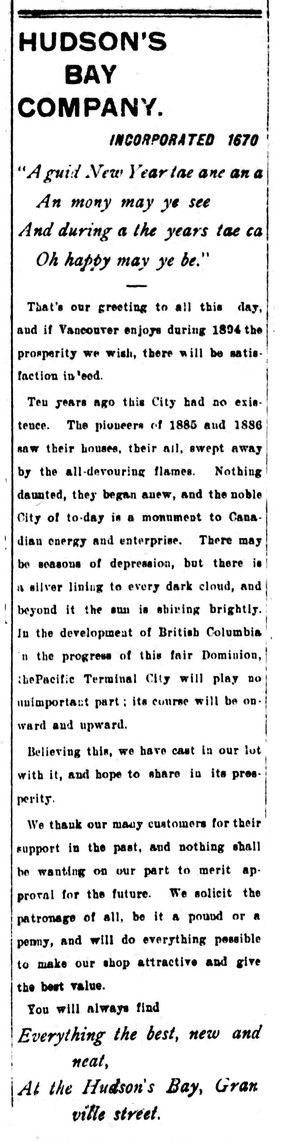
Things were so dicey that the Hudson’s Bay Company took out an ad reassuring people of the company’s belief in Vancouver.

“There may be seasons of depression,” said the ad. “But there is a silver lining to every dark cloud, and beyond it the sun is shining brightly in the development of British Columbia.

“In the progress of this fair Dominion, the Pacific Terminal City will play no unimportant part: its course will be onward and upward. Believing this, we have cast our lot in with it, and hope to share in its prosperity.”

In winter 1894, legend has it that there was a meeting where prominent citizens argued about whether to stick with the fledgling city or move.

Unfortunately, a search on Newspapers.com failed to turn up any mention of a public meeting on Vancouver’s future. It could be it wasn’t an official meeting, it might have been an informal gathering at a bar.

Article content

Advertisement 3

Article content

j2
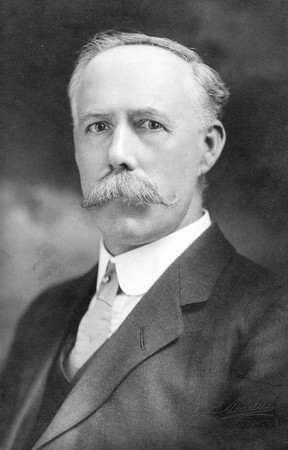
Vancouver pioneer Jonathan Rogers, circa 1916. George T. Wadds/Vancouver Archives AM54-S4-: Port P1442 Photo by George T. Wadds /sun

In any event, the hero of the meeting was a young Welsh immigrant named Jonathan Rogers, who gave a rousing defence of Terminal City.

“He spoke and expressed his faith in Vancouver,” said a book on Rogers that was published after his death in 1945. “He told the meeting that since he believed the depression was general, he was staying. Moreover, he intended to build, and already had two blocks underway.

“There were men that called him a fool, but his courage heartened others, and they decided to stay and carry on. For many old-timers, that night marked a turning point in their careers.”

The first mention of one of the buildings Rogers was constructing was in the March 9, 1894, Vancouver Daily News Advertiser, which could mean the meeting was around the first week of March. The first Rogers Block is still around at 301 West Hastings St., next door to the Dominion Building.

Rogers initially ran a paint store out of the building, a handsome three-storey brick structure that currently houses a Cannabis Culture store and the New Amsterdam Cafe, which describes itself as “an authentic cannabis-inspired lounge.”

Advertisement 4

Article content

When Vancouver’s economy recovered after the Klondike Gold Rush in 1896, Rogers’ faith in Vancouver was proved correct. He went on to become one of Vancouver’s leading citizens: when he died on Dec. 8, 1945, The Province ran a story headlined, “Life of Pioneer Tells Story of City.”

Rogers immigrated to Canada from Wales when he was 22. He wasn’t related to B.T. Rogers of Rogers Sugar, who was American.

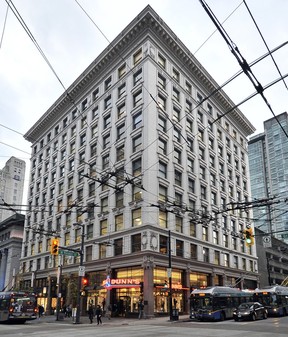
He came west on the first Canadian Pacific Railway passenger train to arrive in Vancouver on May 23, 1887. He bought up four lots, the beginning of a real estate empire that peaked with the 10-storey Rogers Building at 470 Granville St.

Aside from convincing people not to leave town in 1894, Rogers’ biggest legacy is at English Bay. He was on the Vancouver park board for 26 years, and came up with the idea of buying up all the waterfront houses that were initially on the bay waterfront, tearing them down and turning the waterfront into parkland.

When he died he left $100,000 to the park board, which built Jonathan Rogers Park at 7th and Columbia streets in Mount Pleasant.

jmackie@postmedia.com

Advertisement 5

Article content

Recommended from Editorial

  1. There were only about 600 people in Vancouver when the city was incorporated, almost all of them men. Most locals called it Gastown, after hotel owner Gassy Jack Deighton. A group of men stand around the old maple tree in Gastown in 1886. View down Carrall Street looking south, with the steps of the old Deighton House Hotel at the far right. In this photo, a group of men stand around the old maple tree in Gastown in 1886. The view is down Carrall Street looking south, with the steps of the old Deighton House Hotel at the far right.

    There were only about 600 people in Vancouver when the city was incorporated, almost all of them men. Most locals called it Gastown, after hotel owner Gassy Jack Deighton

  2. Men and women gathered at platform in Port Moody next to the C.P.R. locomotive that pulled the first passenger train to Burrard Inlet, July 4, 1986. Vancouver Archives AM54-S4-: Can P4

    The first trans-continental passenger train from Montreal to Vancouver arrived at the Canadian Pacific Railway terminus in Coal Harbour on May 23, 1887. But the first trans-continental passenger train from Montreal to Burrard Inlet had arrived in Port Moody almost a year earlier, on July 4, 1886.

j3
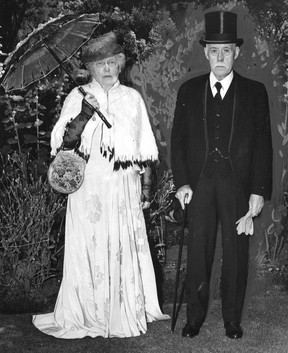
Jonathan and Elizabeth Rogers in costume for a rededication of Stanley Park, Aug. 25, 1943. Vancouver Archives AM54-S4-: Port P1436.1 sun
r1
The Rogers Building at Pender and Granville streets in 2012. Photo by Ian Lindsay /Vancouver Sun
j4
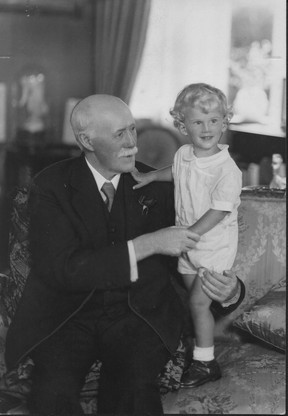
Written on back: Robert Christopher Rogers Malkin, aged 2 1/2 years, son of Lt. Robert E. Malkin and Mrs. R.E. Malkin, with Jonathan Rogers. Photo by George T. Wadds, 1318 Granville St., Vancouver. Vancouver Sun
r1
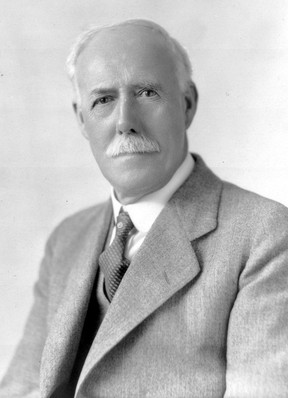
Undated photo of Jonathan Rogers, a pioneer developer in Vancouver (the Rogers building is at Pender and Granville streets) and later an alderman and park board member. No relation to the Rogers Sugar family. PNG
Bay
Hudson’s Bay Company ad in the Jan. 11, 1894 Vancouver Daily News-Advertiser. Vancouver was in the midst of an economic depression at the time, and The Bay ad expressed confidence in the economic prospects of the city, which some people were thinking of leaving.

Bookmark our website and support our journalism: Don’t miss the news you need to know — add VancouverSun.com and TheProvince.com to your bookmarks and sign up for our newsletters here.

You can also support our journalism by becoming a digital subscriber: For just $14 a month, you can get unlimited access to The Vancouver Sun, The Province, National Post and 13 other Canadian news sites. Support us by subscribing today: The Vancouver Sun | The Province.

Article content

Comments

Join the Conversation

This Week in Flyers

Adblock test (Why?)


This Day In History, 1894: An economic depression devastates Vancouver, but Jonathan Rogers talks people into staying - Vancouver Sun
Read More

Carney touts B.C. port expansion plan to strengthen independence, diversify economy - Toronto Star

[unable to retrieve full-text content] Carney touts B.C. port expansion plan to strengthen independence, diversify economy    Toronto Star ...