Rechercher dans ce blog

Friday, July 2, 2021

U.S. economy added 850,000 jobs last month, far more than expected - CBC.ca

In an encouraging burst of hiring, America's employers added 850,000 jobs in June, well above the average of the previous three months and a sign that companies may be having an easier time finding enough workers to fill open jobs.

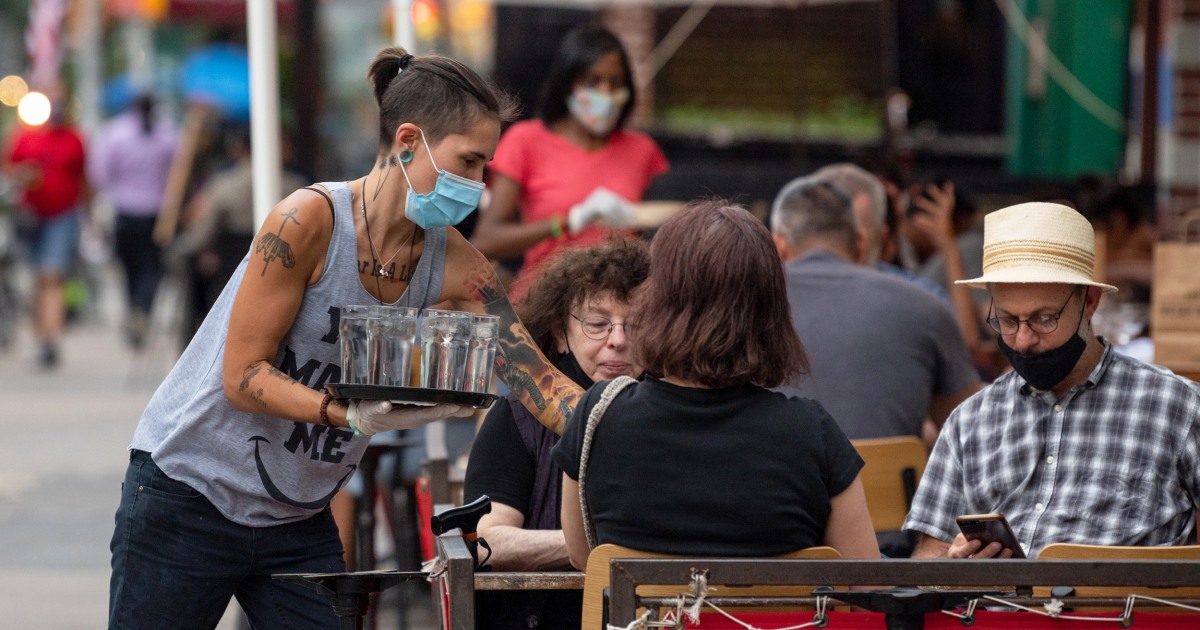
Friday's report from the U.S. Labour Department was the latest sign that the reopening of the economy is propelling a powerful rebound from the pandemic recession. Restaurant traffic across the country is nearly back to pre-pandemic levels, and more people are shopping, travelling and attending sports and entertainment events.

The number of people flying each day is also about 80 per cent of pre-COVID-19 levels. And Americans' confidence in the economic outlook has nearly fully recovered.

The result is that many businesses are desperate to hire and have posted a record-high number of jobs. With competition for workers intensifying, especially at restaurants and tourist and entertainment venues, employers are offering higher pay, along with signing and retention bonuses and more flexible hours. The proportion of job advertisements that promise a bonus has more than doubled in the past year, the employment website Indeed has found.

The unemployment rate rose to 5.9 per cent, up slightly from May but still well down from the peak it hit of 14.8 per cent rate in April of last year, just after the coronavirus erupted and triggered tens of millions of layoffs.

Not enough workers

Hiring is picking up, and so is the supply of available jobs.

Total available jobs reached 9.3 million in April, the highest in 20 years of data, according to the Labour Department. Employment website Indeed has said that job postings have increased still further since then.

The supply of potential hires, however, is being held back by a variety of factors. Many Americans still have health concerns about working around large numbers of people. About 1.5 million people, mostly women, are no longer working or looking for work because they had to care for children when schools and daycare centres shut down. And roughly 2.6 million older workers took advantage of enlarged stock portfolios and home values to retire early.

The number of people boarding flights in the U.S. is rising steadily, another sign that the world's largest economy is getting back to something approaching normal. (Charlie Riedel/The Associated Press)

On Thursday, the government reported that the number of people who applied for jobless aid last week fell to 364,000, the lowest level since the pandemic began.

There are also signs that people are re-evaluating their work and personal lives and aren't necessarily interested in returning to their old jobs, particularly those that offer modest wages. The proportion of Americans who quit their jobs in April reached its highest level in more than 20 years.

Nearly six per cent of workers who are in an industry category that includes restaurants, hotels, casinos and amusement parks quit their jobs in April — twice the proportion of workers in all sectors who did so.

A rising number of people quitting jobs, often for higher-paying positions, means that even employers that have been hiring may be struggling to maintain sufficient staffing levels.

While the jobs news is positive, economist Sal Guatieri with Bank of Montreal noted that a lot of sectors are still showing very little employment growth.

"Most of the new jobs now being created are in sectors that were slammed by the pandemic, while companies in other industries are struggling to find available workers ... this doesn't bode well for strong organic growth," he said.

Adblock test (Why?)


U.S. economy added 850,000 jobs last month, far more than expected - CBC.ca
Read More

Boosting the Economy: The Impact of US Government Spending Plans - International Monetary Fund

[unable to retrieve full-text content]

Boosting the Economy: The Impact of US Government Spending Plans  International Monetary Fund
Boosting the Economy: The Impact of US Government Spending Plans - International Monetary Fund
Read More

U.S. economy added 850,000 jobs last month, as companies scramble to find workers - NBC News

The U.S. economy gained 850,000 jobs in June and the unemployment rate rose to 5.9 percent, from 5.8 percent, a sign that the recovery of the world’s largest economy is building momentum after misses in April and May.

Economists had expected gains of roughly 700,000 jobs and a drop of 0.1 to 0.2 percent in the unemployment rate as Americans have increased activities like air travel, staying at hotels, eating in restaurants and visiting movie theaters.

The positive employment report, released Friday by the Bureau of Labor Statistics, was cheered by economists.

"June’s better-than-expected payroll gains provide some needed reassurance that the healing of the job market remains a work in progress," said Mark Hamrick, senior economic analyst at Bankrate. "The June showing is solidly above this year’s monthly average pace of more than 500,000 jobs added or recovered."

Economists might have been too optimistic initially, said Julia Pollak, a labor economist at the jobs site ZipRecruiter, adding that it’s hard to overstate the amount of disruption Covid-19 inflicted on the economy, and the extent to which it upended the career trajectories for millions of workers. All of this adds up to a critical function of the economy that isn’t yet working normally.

“There are all kinds of bottlenecks and frictions in the process of restaffing entire industries,” Pollak said. For instance, she added, a company that laid off all of its administrative personnel would have to recreate its human resources department before rehiring on a large scale.

Economists tend to dislike attaching too much weight to a single month’s report, since it provides a backward-looking snapshot that, even with seasonal adjustments, can remain volatile.

“I think it’s likely going to be pretty noisy here over the next few months as we go through the dog days of summer,” said Cliff Hodge, chief investment officer at Cornerstone Wealth.

The trajectory of the labor market recovery over the next few months will give policymakers — and investors — a better sense of what the future holds. “I think we're going to be looking quite carefully at what the participation rate is doing,” said James McCann, deputy chief economist at Aberdeen Standard Investments. “What the data could do is cement investors’ thinking about when the Fed might announce a tapering of asset purchases,” he said.

Policymakers have mostly agreed that current pockets of inflation are transitory. But if job gains are robust and both unemployment and underemployment undergo sustained decreases, worry about rising wages creating inflationary pressure could persuade Federal Reserve Chairman Jerome Powell and the other members of the central bank to revisit its massive bond-buying program sooner rather than later.

“It could nudge the Fed to act more quickly than market participants have baked in at the moment,” Hodge said.

Weekly jobless claims data released Thursday showed initial applications for unemployment fell to a new pandemic-era low of 364,000, while payroll processor ADP reported on Wednesday private-sector job growth of 692,000 for June. More than 330,000, or nearly half, of those new jobs came from the leisure and hospitality sector. Overall, gains were broad-based, appearing in every sector except information services, which was down slightly.

Small businesses added 215,000 of those jobs, even though the economic activity taking place there — particularly at restaurants and bars, stores and hotels — has been constrained as business owners struggle to compete for workers with big-box retailers and chain restaurants for hourly workers.

“We are fortunate in the U.S. to have ubiquitous access to vaccines, which has led to a massive shift back to locally owned businesses in these sectors,” said Eric Groves, co-founder and CEO of the small-business networking platform Alignable. “But with the surge comes a massive imbalance of supply and demand within the hourly labor markets,” he said.

In ordinary economic cycles, sustained wage growth can draw people off the sidelines and back into jobs. In recent months, a confluence of factors has created a bottleneck that has interrupted labor flow and led to increased wages, particularly at the lower end of the pay scale.

“There have been some forces holding back stronger progress, and we expect that to ease,” McCann said. “I think it’s a labor market set to accelerate over the next few months.”

A lack of child care, a skills mismatch and extended unemployment benefits have been frequently cited as potential deterrents keeping would-be workers from jobs, although opponents of rolling the program back before it expires in September say enhanced benefits give people a financial cushion that let working parents care for their kids and give displaced workers the chance to seek out new skills and credentials.

Even as vaccination levels rise, the ongoing fear of contracting Covid-19 lingers for many, Hodge said.

“With the delta variant, you’re seeing a bit of a resurgence in virus jitters,” he said. “People may still be uneasy about getting back out there and getting to work,” particularly in high-contact service jobs, he added.

“It’s trending in the right direction, but we’re going to see fits and starts, especially as the benefits roll off,” Hodge said. “It’s going to be lumpy, but we think over the coming months, labor will continue to trend in the right direction.”

Adblock test (Why?)


U.S. economy added 850,000 jobs last month, as companies scramble to find workers - NBC News
Read More

Economy contracted 0.3% in April, biggest hit since early days of pandemic - Campbell River Mirror

The Canadian economy appears to have suffered its worst two-month stretch since the great plunge it took just over a year ago, as Statistics Canada reported a decline in real gross domestic product for April and foresees a similar drop in May.

Statistics Canada said Wednesday real gross domestic product fell 0.3 per cent in April, which was better than an initial estimate a few weeks ago of a drop of 0.8 per cent. It was the first decline in real GDP since April 2020 during the first wave of the pandemic.

The agency also said its preliminary estimate for May showed a similar drop of 0.3 per cent as many restrictions remained in place through the month as the country grappled with the third wave of the COVID-19 pandemic.

The overall decline in April, as well as the early estimate for May, put overall economic activity about one per cent below pre-pandemic levels seen in February 2020.

Attention will now turn to June as experts expect a consumer-led recovery with vaccination rates on the rise and restrictions rolling back, which should fuel job growth and reduce health concerns.

“The ingredients that support consumer spending are all lining up,” said Deloitte Canada chief economist Craig Alexander.

“It isn’t going to go back to pre-COVID levels, but the direction of growth is going to be unambiguously positive. I firmly believe that by the end of the year, I won’t be able to get a reservation at a restaurant because people are going to want to reconnect.”

In Alexander’s latest forecast, spending on durable goods grows by 13.4 per cent this year, which he said is already pretty much in the books from strong gains in the first half of 2021. He said tempering annual growth is an expected spending shift to service-sector activities in the second half.

Card-transaction data suggests service-sector spending is on the rise for retail and restaurants, and some early signs of dollars flowing into the travel sector, said RBC senior economist Nathan Janzen.

“The backward-looking data for April and May still looks soft, as would be fully expected, but there’s a more optimistic story for June and the summer that’s already in place,” he said.

CIBC senior economist Royce Mendes said indications now suggest that annualized growth in the second quarter should at least hit two per cent, compared with the no-growth scenario many experts had previously expected.

Driving the decline in April was a 5.5 per cent drop in the retail sector after two months of increases, including a strong March where retail sales hit $55.3 billion, a year-over-year increase of 26.7 per cent. Manufacturing fell one per cent in April after growth in March of 1.5 per cent.

Statistics Canada also noted the real estate sector contracted 0.7 per cent in April, its first drop since October 2020, as home sales slowed in Canada’s major urban centres. As well, accommodation and food services declined 4.6 per cent.

There were some silver linings, though.

Despite travel restrictions, accommodation services rose 0.5 per cent in April as Statistics Canada noted more Canadians opted to go camping.

The overall picture was of an economy that has adapted where able to restrictions, such as online shopping and curbside pickup, but one whose trajectory is still tied to path of the pandemic.

One pothole in that path is the virus’s more contagious Delta variant.

TD senior economist Sri Thanabalasingam said companies could face tighter restrictions if the variant picks up steam and case counts and hospitalizations rise. That would weigh on economic activity and slow the recovery, he said.

He added the variant poses a similar risk to the pace of the recovery in countries like the United States that would dampens demand for Canadian exports.

“Even though domestically we might be a little bit more inoculated from the impacts of the variant because of our impressive vaccination take-up, it really is a global challenge that has to be overcome for Canada to really get back to its full economic capacity,” he said.

Jordan Press, The Canadian Press

Like us on Facebook and follow us on Twitter.

Want to support local journalism? Make a donation here.

economy

Adblock test (Why?)


Economy contracted 0.3% in April, biggest hit since early days of pandemic - Campbell River Mirror
Read More

Economy contracted 0.3% in April, biggest hit since early days of pandemic - Abbotsford News

The Canadian economy appears to have suffered its worst two-month stretch since the great plunge it took just over a year ago, as Statistics Canada reported a decline in real gross domestic product for April and foresees a similar drop in May.

Statistics Canada said Wednesday real gross domestic product fell 0.3 per cent in April, which was better than an initial estimate a few weeks ago of a drop of 0.8 per cent. It was the first decline in real GDP since April 2020 during the first wave of the pandemic.

The agency also said its preliminary estimate for May showed a similar drop of 0.3 per cent as many restrictions remained in place through the month as the country grappled with the third wave of the COVID-19 pandemic.

The overall decline in April, as well as the early estimate for May, put overall economic activity about one per cent below pre-pandemic levels seen in February 2020.

Attention will now turn to June as experts expect a consumer-led recovery with vaccination rates on the rise and restrictions rolling back, which should fuel job growth and reduce health concerns.

“The ingredients that support consumer spending are all lining up,” said Deloitte Canada chief economist Craig Alexander.

“It isn’t going to go back to pre-COVID levels, but the direction of growth is going to be unambiguously positive. I firmly believe that by the end of the year, I won’t be able to get a reservation at a restaurant because people are going to want to reconnect.”

In Alexander’s latest forecast, spending on durable goods grows by 13.4 per cent this year, which he said is already pretty much in the books from strong gains in the first half of 2021. He said tempering annual growth is an expected spending shift to service-sector activities in the second half.

Card-transaction data suggests service-sector spending is on the rise for retail and restaurants, and some early signs of dollars flowing into the travel sector, said RBC senior economist Nathan Janzen.

“The backward-looking data for April and May still looks soft, as would be fully expected, but there’s a more optimistic story for June and the summer that’s already in place,” he said.

CIBC senior economist Royce Mendes said indications now suggest that annualized growth in the second quarter should at least hit two per cent, compared with the no-growth scenario many experts had previously expected.

Driving the decline in April was a 5.5 per cent drop in the retail sector after two months of increases, including a strong March where retail sales hit $55.3 billion, a year-over-year increase of 26.7 per cent. Manufacturing fell one per cent in April after growth in March of 1.5 per cent.

Statistics Canada also noted the real estate sector contracted 0.7 per cent in April, its first drop since October 2020, as home sales slowed in Canada’s major urban centres. As well, accommodation and food services declined 4.6 per cent.

There were some silver linings, though.

Despite travel restrictions, accommodation services rose 0.5 per cent in April as Statistics Canada noted more Canadians opted to go camping.

The overall picture was of an economy that has adapted where able to restrictions, such as online shopping and curbside pickup, but one whose trajectory is still tied to path of the pandemic.

One pothole in that path is the virus’s more contagious Delta variant.

TD senior economist Sri Thanabalasingam said companies could face tighter restrictions if the variant picks up steam and case counts and hospitalizations rise. That would weigh on economic activity and slow the recovery, he said.

He added the variant poses a similar risk to the pace of the recovery in countries like the United States that would dampens demand for Canadian exports.

“Even though domestically we might be a little bit more inoculated from the impacts of the variant because of our impressive vaccination take-up, it really is a global challenge that has to be overcome for Canada to really get back to its full economic capacity,” he said.

Jordan Press, The Canadian Press

Like us on Facebook and follow us on Twitter.

Want to support local journalism? Make a donation here.

economy

Adblock test (Why?)


Economy contracted 0.3% in April, biggest hit since early days of pandemic - Abbotsford News
Read More

Thursday, July 1, 2021

This transports group is waving a 'yellow flag' for the economy, Miller Tabak strategist says - CNBC

In this article

Transports stocks are coming off their best first half since 1997.

The Dow transports rallied 19% in the first six months of the year, though the bulk of those gains were made in the first quarter followed by a stretch of consolidation in the last few months.

Matt Maley, chief market strategist at Miller Tabak, is now watching the group closely for its next move.

"We've definitely seen this divergence develop here in the last six or seven weeks with the transportation index underperforming; it's down about 6%, while the S&P and the rest of the stock market has moved up slightly," Maley told CNBC's "Trading Nation" on Thursday.

Maley notes that much of the recent weakness has been tied to the airline stocks, which have taken a hit on concerns over the delta variant and a resurgence in Covid cases in some corners of the globe. JetBlue, Southwest and Alaska Air, for example, are all down more than 11% over the past three months.

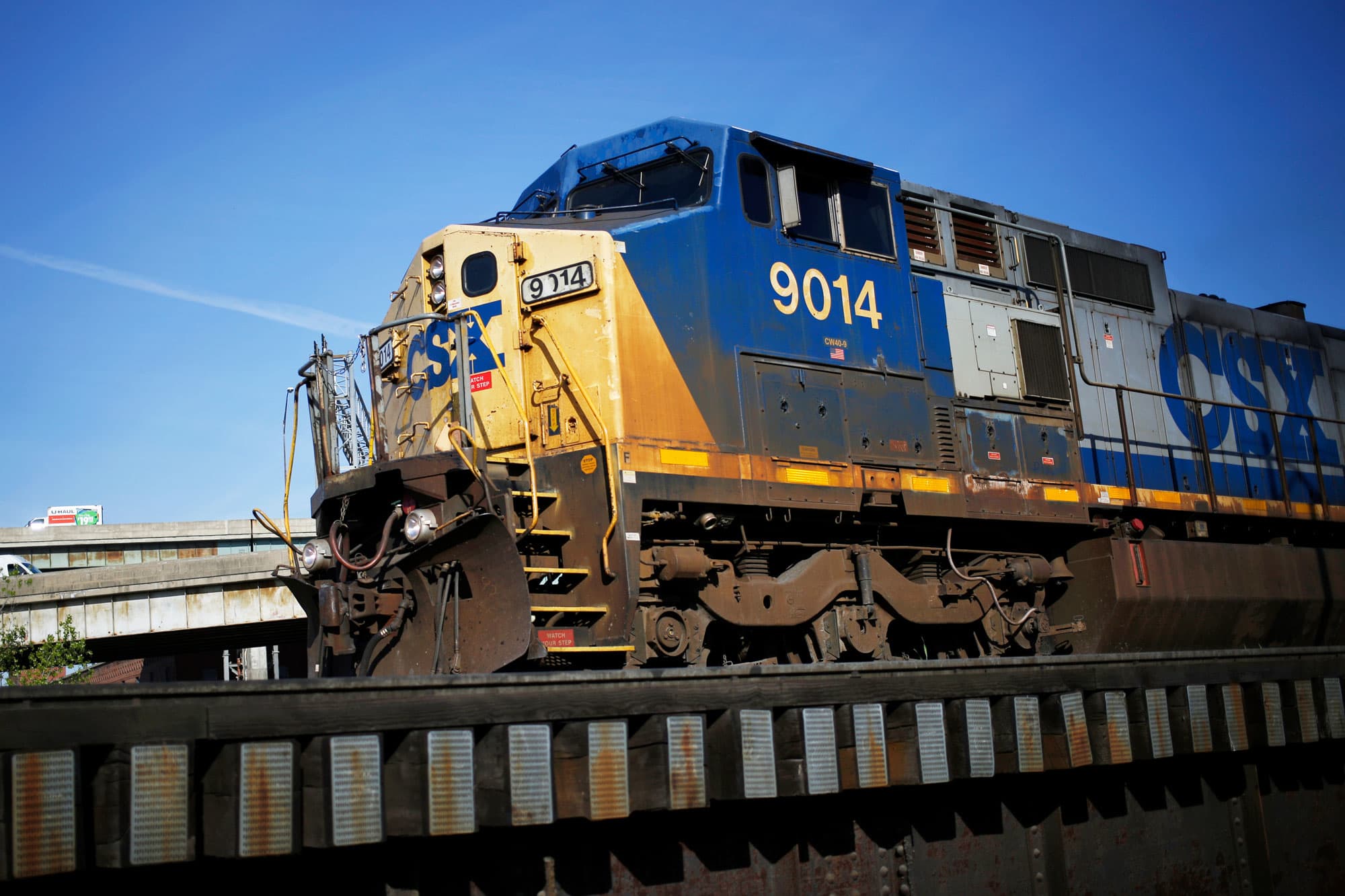
"I am watching the railroads very closely because that has nothing to do with leisure travel, and they have also been weak. Not a lot of people look at the S&P railroad index, but it's an important one, and it's already broken below its trend line going all the way back to March 2020," said Maley.

He is using the railroad stocks as a barometer for broader strength in the U.S. economy and the rest of the stock market.

"If it sees another downtrend, [if] it breaks below its June lows of 2,775, that lower low is going to signal that we have bigger problems than we thought and that the economy may not be as strong in the second half as a lot of people have been thinking, so right now it's a yellow flag. Look for that railroad index to see if it turns into a red one," said Maley.

The railroads subsector closed Thursday at 2,862. It's down more than 2% in the past three months.

Disclaimer

Adblock test (Why?)


This transports group is waving a 'yellow flag' for the economy, Miller Tabak strategist says - CNBC
Read More

Economy contracted 0.3% in April, biggest hit since early days of pandemic - Cowichan Valley Citizen

The Canadian economy appears to have suffered its worst two-month stretch since the great plunge it took just over a year ago, as Statistics Canada reported a decline in real gross domestic product for April and foresees a similar drop in May.

Statistics Canada said Wednesday real gross domestic product fell 0.3 per cent in April, which was better than an initial estimate a few weeks ago of a drop of 0.8 per cent. It was the first decline in real GDP since April 2020 during the first wave of the pandemic.

The agency also said its preliminary estimate for May showed a similar drop of 0.3 per cent as many restrictions remained in place through the month as the country grappled with the third wave of the COVID-19 pandemic.

The overall decline in April, as well as the early estimate for May, put overall economic activity about one per cent below pre-pandemic levels seen in February 2020.

Attention will now turn to June as experts expect a consumer-led recovery with vaccination rates on the rise and restrictions rolling back, which should fuel job growth and reduce health concerns.

“The ingredients that support consumer spending are all lining up,” said Deloitte Canada chief economist Craig Alexander.

“It isn’t going to go back to pre-COVID levels, but the direction of growth is going to be unambiguously positive. I firmly believe that by the end of the year, I won’t be able to get a reservation at a restaurant because people are going to want to reconnect.”

In Alexander’s latest forecast, spending on durable goods grows by 13.4 per cent this year, which he said is already pretty much in the books from strong gains in the first half of 2021. He said tempering annual growth is an expected spending shift to service-sector activities in the second half.

Card-transaction data suggests service-sector spending is on the rise for retail and restaurants, and some early signs of dollars flowing into the travel sector, said RBC senior economist Nathan Janzen.

“The backward-looking data for April and May still looks soft, as would be fully expected, but there’s a more optimistic story for June and the summer that’s already in place,” he said.

CIBC senior economist Royce Mendes said indications now suggest that annualized growth in the second quarter should at least hit two per cent, compared with the no-growth scenario many experts had previously expected.

Driving the decline in April was a 5.5 per cent drop in the retail sector after two months of increases, including a strong March where retail sales hit $55.3 billion, a year-over-year increase of 26.7 per cent. Manufacturing fell one per cent in April after growth in March of 1.5 per cent.

Statistics Canada also noted the real estate sector contracted 0.7 per cent in April, its first drop since October 2020, as home sales slowed in Canada’s major urban centres. As well, accommodation and food services declined 4.6 per cent.

There were some silver linings, though.

Despite travel restrictions, accommodation services rose 0.5 per cent in April as Statistics Canada noted more Canadians opted to go camping.

The overall picture was of an economy that has adapted where able to restrictions, such as online shopping and curbside pickup, but one whose trajectory is still tied to path of the pandemic.

One pothole in that path is the virus’s more contagious Delta variant.

TD senior economist Sri Thanabalasingam said companies could face tighter restrictions if the variant picks up steam and case counts and hospitalizations rise. That would weigh on economic activity and slow the recovery, he said.

He added the variant poses a similar risk to the pace of the recovery in countries like the United States that would dampens demand for Canadian exports.

“Even though domestically we might be a little bit more inoculated from the impacts of the variant because of our impressive vaccination take-up, it really is a global challenge that has to be overcome for Canada to really get back to its full economic capacity,” he said.

Jordan Press, The Canadian Press

Like us on Facebook and follow us on Twitter.

Want to support local journalism? Make a donation here.

economy

Adblock test (Why?)


Economy contracted 0.3% in April, biggest hit since early days of pandemic - Cowichan Valley Citizen
Read More

Carney touts B.C. port expansion plan to strengthen independence, diversify economy - Toronto Star

[unable to retrieve full-text content] Carney touts B.C. port expansion plan to strengthen independence, diversify economy    Toronto Star ...